Introduction
Press-fit assembly is a fundamental technique used in manufacturing to join components by applying pressure to force one part into another. This method leverages the friction between the mating parts to create a secure and durable connection without the need for adhesives, fasteners, or welding. This article explores the press-fit assembly process, its benefits, applications, and its critical role in various industries.
Understanding the Press-Fit Assembly Process
Press-fit assembly involves inserting one component, usually a pin, shaft, or bushing, into a precisely machined hole or cavity in another component. The interference fit between the parts creates a strong bond due to the frictional forces. The key steps in the press-fit assembly process include:
- Component Preparation:
- Objective: Ensure that the components are clean, free of contaminants, and accurately machined.
- Methods: Parts are typically cleaned to remove oils, dirt, and debris. Precision machining ensures that the dimensions of the parts meet the specified tolerances.
- Alignment:
- Objective: Align the parts accurately to ensure proper insertion.
- Methods: Fixtures or alignment tools are used to position the parts correctly, minimizing the risk of misalignment and damage during insertion.
- Press-Fit Operation:
- Objective: Apply pressure to insert one component into another, creating a tight interference fit.
- Methods: Hydraulic or mechanical presses are used to apply a controlled amount of force, ensuring a smooth and consistent insertion process.
- Inspection:
- Objective: Verify the quality and integrity of the assembled joint.
- Methods: Dimensional checks, visual inspections, and functional tests are conducted to ensure that the assembly meets the required specifications.
Benefits of Press-Fit Assembly
- Strong, Durable Joints:
Press-fit assemblies create robust connections that can withstand significant mechanical stresses and loads. - No Need for Additional Materials:
This method eliminates the need for adhesives, fasteners, or welding, reducing material costs and simplifying the assembly process. - High Precision:
The process relies on precise machining and controlled insertion, ensuring consistent and repeatable results. - Clean and Contamination-Free:
Press-fit assembly does not require the use of liquids or adhesives, reducing the risk of contamination and ensuring a clean final product. - Efficient and Cost-Effective:
The elimination of additional materials and the straightforward nature of the process make press-fit assembly efficient and cost-effective, especially for high-volume production. - Ease of Automation:
The press-fit process can be easily automated, enhancing production speed, consistency, and reducing labor costs.
Applications of Press-Fit Assembly
- Automotive Industry:
- Applications: Assembling gears, bearings, shafts, and bushings.
- Benefits: Provides strong, reliable joints that withstand the high mechanical stresses and vibrations encountered in automotive applications.
- Aerospace Industry:
- Applications: Joining components in aircraft engines, landing gear, and structural assemblies.
- Benefits: Ensures high-strength connections that are critical for the safety and performance of aerospace components.
- Electronics Industry:
- Applications: Assembling connectors, sockets, and circuit board components.
- Benefits: Provides precise, contamination-free joints essential for reliable electronic performance.
- Medical Devices:
- Applications: Joining components in surgical instruments, diagnostic equipment, and implants.
- Benefits: Ensures biocompatible, clean, and strong joints critical for patient safety and device reliability.
- Industrial Machinery:
- Applications: Assembling gears, pulleys, and other mechanical components.
- Benefits: Offers robust connections that can endure heavy use and harsh industrial environments.
- Consumer Goods:
- Applications: Assembling parts in appliances, tools, and recreational equipment.
- Benefits: Provides durable, cost-effective joints that enhance product quality and longevity.
Key Considerations for Press-Fit Assembly
- Material Compatibility:
Ensuring that the materials of the mating parts are compatible and can withstand the stresses of the press-fit process without damage or deformation. - Tolerances:
Maintaining tight tolerances in the machining of the parts is crucial for achieving the desired interference fit and ensuring the integrity of the joint. - Surface Finish:
The surface finish of the mating parts can affect the frictional forces and the quality of the fit. A smooth, clean surface is typically required for optimal results. - Assembly Force:
Determining the appropriate amount of force required for the press-fit operation is essential to avoid damaging the parts and ensure a secure fit. This can be calculated based on the material properties and dimensions of the parts. - Tooling and Equipment:
Using the right tooling and equipment, such as hydraulic presses and alignment fixtures, is important for achieving consistent and reliable results.
Conclusion
Press-fit assembly is a key technique that offers numerous benefits, including strong, durable joints, high precision, and cost-effectiveness. Its versatility and reliability make it essential in various industries, from automotive and aerospace to electronics and medical devices. As technology advances, press-fit assembly processes will continue to evolve, further enhancing their capabilities and expanding their applications in the manufacturing landscape.
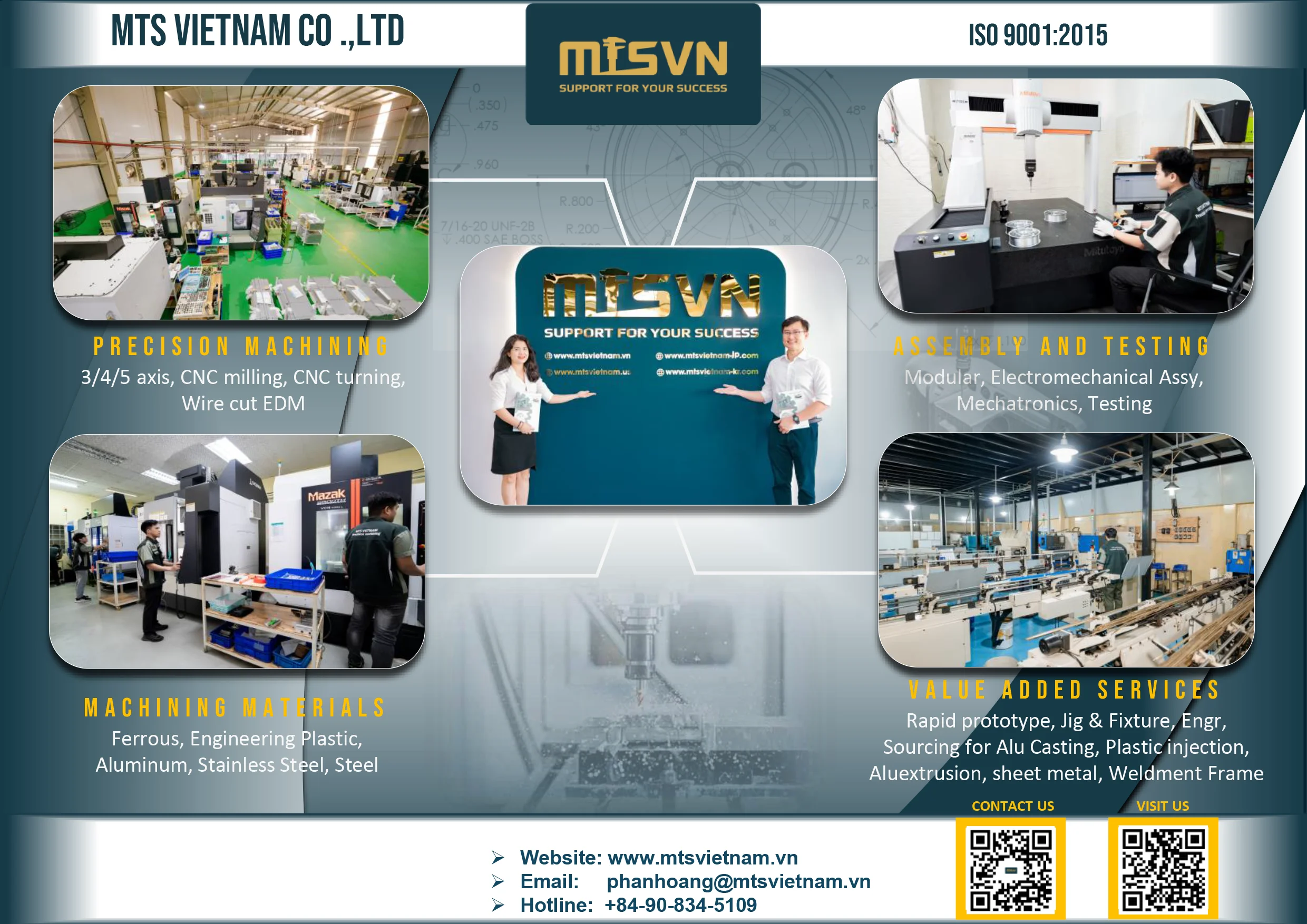
MTS Vietnam is a prominent company specializing in precision mechanical components fabrication. Established in 2017, it has quickly become a reputable name in the Vietnamese and Southeast Asian markets. The company's expertise lies in CNC milling and turning parts made from a variety of materials, including Aluminum, Steel, Stainless, POM, and other engineering plastics. MTS Vietnam is dedicated to supporting the success of its customers and strives to be a leading company in the field of precision mechanical processing both in Vietnam and internationally.
In addition to its fabrication services, MTS Vietnam offers assembly services for components and machines, as well as CNC program services. This comprehensive range of services is aimed at providing optimal solutions and benefits to its customers through the company's ecosystem and strengths. MTS Vietnam emphasizes the importance of investing in new technology and quality control equipment to ensure that it can deliver merchandise at competitive prices and within the required deadlines.
WORKSHOP: 248/10 ĐT743A Street, Binh Thung 1 Quarter, Dong Hoa Ward, Ho Chi Minh City, Vietnam
Tel/zalo/viber: 0908.345.109
Email: phanhoang@mtsvietnam.vn | info@mtsvietnam.vn
Website: www.mtsvietnam.vn (Global Market) | www.mtsvietnam-jp.com (日本)
For USA Sales, please contact MTS USA at:
Tel/zalo/viber: 978-777-1716
Email: sales@mts-usasales.com
Website: www.mtsvietnam.us (US Market)