Introduction
Heat treatment is a critical surface treatment technique used to alter the physical and mechanical properties of metals and alloys. This process involves controlled heating and cooling of materials to achieve desired characteristics such as increased hardness, strength, and ductility. Heat treatment is essential in various industries, ensuring that metal components perform reliably under demanding conditions. This article explores the heat treatment process, its benefits, applications, and its vital role in enhancing the performance and longevity of metal parts.
Understanding the Heat Treatment Process
Heat treatment involves several stages of controlled heating and cooling to modify the microstructure of metals. The process is tailored to achieve specific material properties and typically includes the following key steps:
- Heating
- Objective: Raise the temperature of the metal to a specific level where its internal structure changes.
- Methods: The metal is heated in a furnace or through induction heating to a precise temperature, depending on the desired properties and material type.
- Soaking
- Objective: Maintain the metal at the target temperature to ensure uniform heat distribution and transformation of the microstructure.
- Methods: The metal is held at the specified temperature for a predetermined period, allowing the entire part to reach thermal equilibrium.
- Cooling
- Objective: Control the rate of cooling to achieve the desired mechanical properties.
- Methods: The metal is cooled at a controlled rate using methods such as quenching (rapid cooling in water, oil, or air), annealing (slow cooling), or normalizing (air cooling).
Types of Heat Treatment Processes
- Annealing
- Process: The metal is heated to a specific temperature and then cooled slowly, usually in a furnace.
- Benefits: Reduces hardness, relieves internal stresses, and improves ductility and machinability.
- Applications: Used for metals that require subsequent machining or forming, such as steel, copper, and aluminum.
- Quenching
- Process: The metal is heated to a high temperature and then rapidly cooled in a quenching medium like water, oil, or air.
- Benefits: Increases hardness and strength by transforming the microstructure.
- Applications: Commonly used for high-carbon steels and tool steels to achieve high hardness and wear resistance.
- Tempering
- Process: The quenched metal is reheated to a lower temperature and then cooled at a controlled rate.
- Benefits: Reduces brittleness and internal stresses while maintaining hardness.
- Applications: Often performed on quenched steels to improve toughness and ductility.
- Normalizing
- Process: The metal is heated to a high temperature and then allowed to cool in air.
- Benefits: Refines the grain structure, improves machinability, and enhances mechanical properties.
- Applications: Used for ferrous metals to improve toughness and relieve internal stresses.
- Case Hardening
- Process: Only the surface layer of the metal is hardened while the core remains relatively soft.
- Benefits: Provides a hard, wear-resistant surface with a tough, ductile core.
- Applications: Used for gears, camshafts, and other components requiring a hard surface and a tough core.
Benefits of Heat Treatment
- Enhanced Mechanical Properties:
Heat treatment improves hardness, strength, toughness, and ductility, tailoring the material properties to specific application requirements. - Improved Wear Resistance:
Processes like quenching and case hardening increase the surface hardness of metals, enhancing their resistance to wear and abrasion. - Stress Relief:
Annealing and tempering reduce internal stresses induced during manufacturing processes, preventing deformation and cracking. - Better Machinability:
Heat treatment processes like annealing improve the machinability of metals, making them easier to cut, shape, and form. - Corrosion Resistance:
Certain heat treatments can enhance the corrosion resistance of metals, prolonging their service life in corrosive environments.
Applications of Heat Treatment
- Automotive Industry:
- Applications: Engine components, gears, crankshafts, and suspension parts.
- Benefits: Increases strength and wear resistance, ensuring the durability and reliability of critical automotive parts.
- Aerospace Industry:
- Applications: Aircraft frames, turbine blades, landing gear, and structural components.
- Benefits: Enhances mechanical properties and fatigue resistance, crucial for safety and performance in aerospace applications.
- Tool and Die Industry:
- Applications: Cutting tools, dies, molds, and punches.
- Benefits: Achieves high hardness and wear resistance, essential for the longevity and performance of tooling components.
- Construction Industry:
- Applications: Structural beams, reinforcing bars, and fasteners.
- Benefits: Improves strength and toughness, ensuring the structural integrity of buildings and infrastructure.
- Manufacturing and Machinery:
- Applications: Machine parts, bearings, and wear components.
- Benefits: Enhances durability and resistance to wear and fatigue, extending the lifespan of machinery and equipment.
- Medical Devices:
- Applications: Surgical instruments, implants, and medical equipment.
- Benefits: Provides the necessary mechanical properties and corrosion resistance for safe and reliable medical devices.
Conclusion
Heat treatment is a key surface treatment technique that plays a vital role in enhancing the mechanical properties and performance of metals and alloys. By carefully controlling the heating and cooling processes, manufacturers can achieve desired hardness, strength, ductility, and wear resistance, making heat-treated metals suitable for a wide range of demanding applications. As technology advances, heat treatment processes will continue to evolve, further expanding their capabilities and ensuring the reliability and durability of critical metal components in various industries.
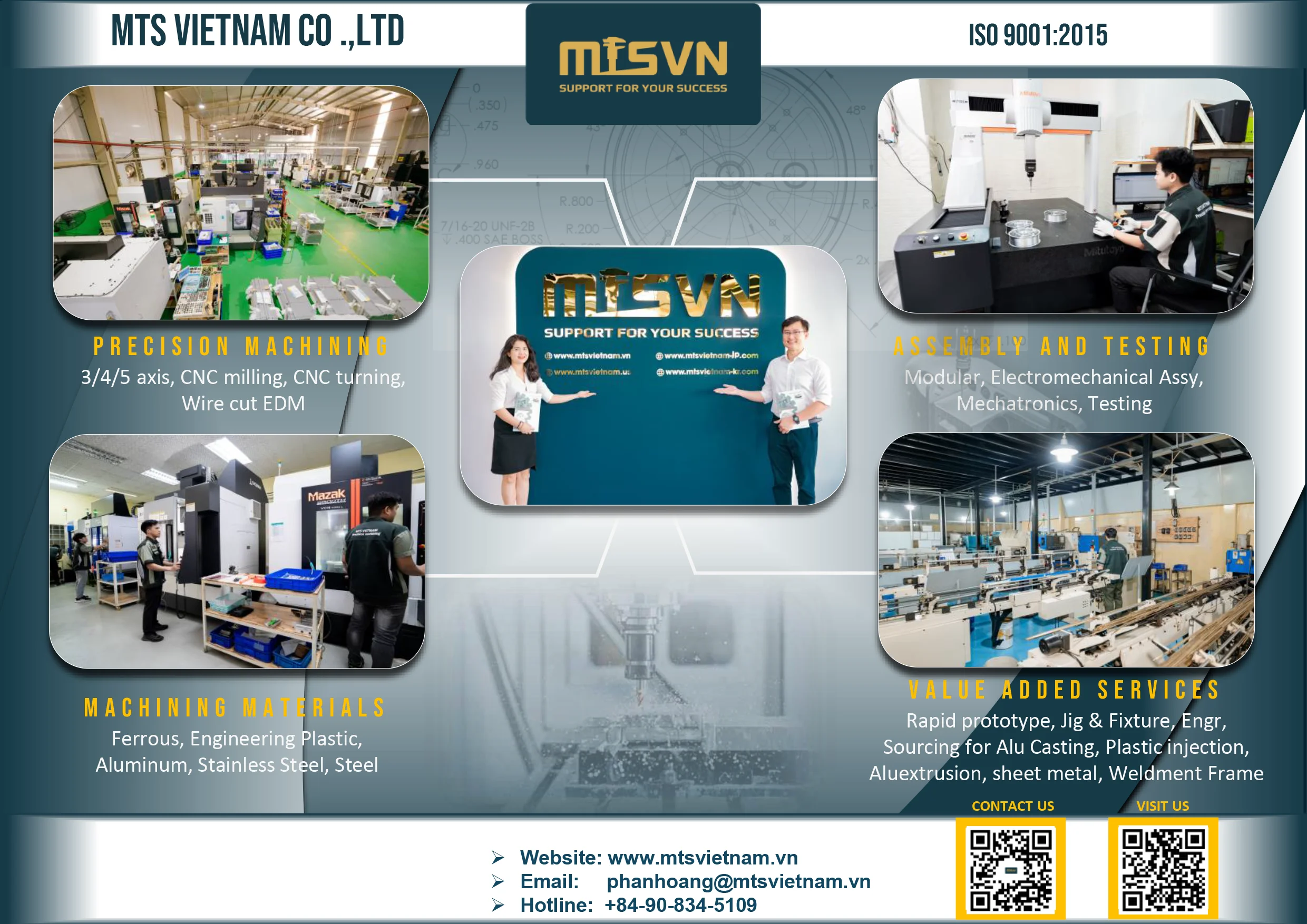
MTS Vietnam is a prominent company specializing in precision mechanical components fabrication. Established in 2017, it has quickly become a reputable name in the Vietnamese and Southeast Asian markets. The company's expertise lies in CNC milling and turning parts made from a variety of materials, including Aluminum, Steel, Stainless, POM, and other engineering plastics. MTS Vietnam is dedicated to supporting the success of its customers and strives to be a leading company in the field of precision mechanical processing both in Vietnam and internationally.
In addition to its fabrication services, MTS Vietnam offers assembly services for components and machines, as well as CNC program services. This comprehensive range of services is aimed at providing optimal solutions and benefits to its customers through the company's ecosystem and strengths. MTS Vietnam emphasizes the importance of investing in new technology and quality control equipment to ensure that it can deliver merchandise at competitive prices and within the required deadlines.
WORKSHOP: 248/10 ĐT743A Street, Binh Thung 1 Quarter, Dong Hoa Ward, Ho Chi Minh City, Vietnam
Tel/zalo/viber: 0908.345.109
Email: phanhoang@mtsvietnam.vn | info@mtsvietnam.vn
Website: www.mtsvietnam.vn (Global Market) | www.mtsvietnam-jp.com (日本)
For USA Sales, please contact MTS USA at:
Tel/zalo/viber: 978-777-1716
Email: sales@mts-usasales.com
Website: www.mtsvietnam.us (US Market)