Introduction
Forming is one of the fundamental manufacturing processes in the production of sheet-metal parts. It involves reshaping flat metal sheets into desired configurations without adding or removing material. This process is essential in creating a wide range of products, from simple brackets to complex automotive and aerospace components. This article explores the various forming techniques, their applications, and the importance of forming in the manufacturing industry.
Understanding the Forming Process
Forming in sheet-metal manufacturing involves deforming the metal using mechanical force, heat, or a combination of both to achieve the desired shape. The process relies on the metal's plasticity, allowing it to be reshaped without breaking. Forming techniques are selected based on factors such as material type, part geometry, and production volume.
Key Forming Techniques
- Bending:
- Process: Bending involves applying force to a sheet metal to create an angular bend, changing its shape.
- Advantages: Simple and cost-effective, suitable for producing various angles and complex shapes.
- Applications: Used in manufacturing brackets, enclosures, frames, and other components in automotive, construction, and electronics industries.
- Stamping:
- Process: Stamping uses a die and press to form metal sheets into specific shapes through a single or series of actions.
- Advantages: High production speed, suitable for large-scale production, capable of creating intricate shapes.
- Applications: Widely used in the automotive industry for body panels, engine parts, and interior components, as well as in consumer goods production.
- Deep Drawing:
- Process: Deep drawing involves pulling a metal sheet into a die cavity to create a deep, hollow shape, such as a cup or cylinder.
- Advantages: Produces seamless, hollow parts with high structural integrity.
- Applications: Used in manufacturing kitchen sinks, automotive fuel tanks, and beverage cans.
- Roll Forming:
- Process: Roll forming passes a metal sheet through a series of rollers to progressively shape it into a continuous profile or cross-section.
- Advantages: Efficient for producing long lengths of complex profiles with consistent quality.
- Applications: Commonly used in construction for producing roofing panels, steel framing, and metal gutters.
- Hydroforming:
- Process: Hydroforming uses high-pressure hydraulic fluid to press room-temperature metal into a die, allowing for complex shapes with high precision.
- Advantages: Capable of producing lightweight, strong parts with intricate geometries.
- Applications: Utilized in aerospace and automotive industries for creating lightweight structural components.
- Spinning:
- Process: Spinning involves rotating a metal disc or tube while pressing it against a form to create symmetrical, round parts.
- Advantages: Cost-effective for small to medium production runs, ideal for creating hollow, conical, and cylindrical shapes.
- Applications: Used in manufacturing cookware, musical instruments, and decorative items.
Importance of Forming in Manufacturing
- Versatility and Design Flexibility: Forming techniques allow for the creation of a wide variety of shapes and sizes, accommodating complex designs and custom requirements. This versatility is crucial in industries that demand tailored solutions.
- Material Efficiency: Forming reshapes metal without removing material, leading to minimal waste. This efficiency is particularly important in industries where material costs are significant.
- Structural Integrity: Forming processes enhance the structural integrity of parts by creating seamless and continuous shapes. This is essential for components that must withstand high stress and pressure.
- Cost-Effectiveness: Many forming techniques are cost-effective, especially for high-volume production. Techniques like stamping and roll forming offer rapid production rates and consistent quality, reducing overall manufacturing costs.
- Production Speed: Forming processes, especially those like stamping and roll forming, enable high-speed production, meeting the demands of large-scale manufacturing. This speed is vital for industries with high output requirements.
- Precision and Consistency: Advanced forming techniques provide high precision and consistency, ensuring that each part meets stringent specifications. This is critical in industries such as aerospace and automotive, where precision is paramount.
Applications of Forming in Various Industries
- Automotive Industry: Forming processes are extensively used to produce body panels, chassis components, engine parts, and interior elements, ensuring vehicles' strength, safety, and aesthetics.
- Aerospace Industry: The aerospace sector relies on forming techniques to create lightweight, strong components that meet rigorous performance and safety standards.
- Construction Industry: Forming is used to manufacture structural elements, roofing, and cladding materials, contributing to the durability and functionality of buildings.
- Consumer Goods: Forming processes produce a wide range of consumer goods, from kitchen appliances and cookware to electronic device enclosures and furniture.
- Medical Devices: The medical industry uses forming to create precise and reliable components for surgical instruments, implants, and medical equipment.
- Electronics Industry: Forming techniques are employed to manufacture enclosures, brackets, and heat sinks for electronic devices, ensuring proper fit and function.
Conclusion
Forming is a crucial manufacturing process for sheet-metal parts, offering versatility, efficiency, and precision in producing a wide range of components. By employing various forming techniques, manufacturers can meet the diverse needs of multiple industries, ensuring that sheet-metal parts continue to play a vital role in mechanical engineering and production. As technology advances, forming methods will evolve, further enhancing their capabilities and importance in the manufacturing landscape.
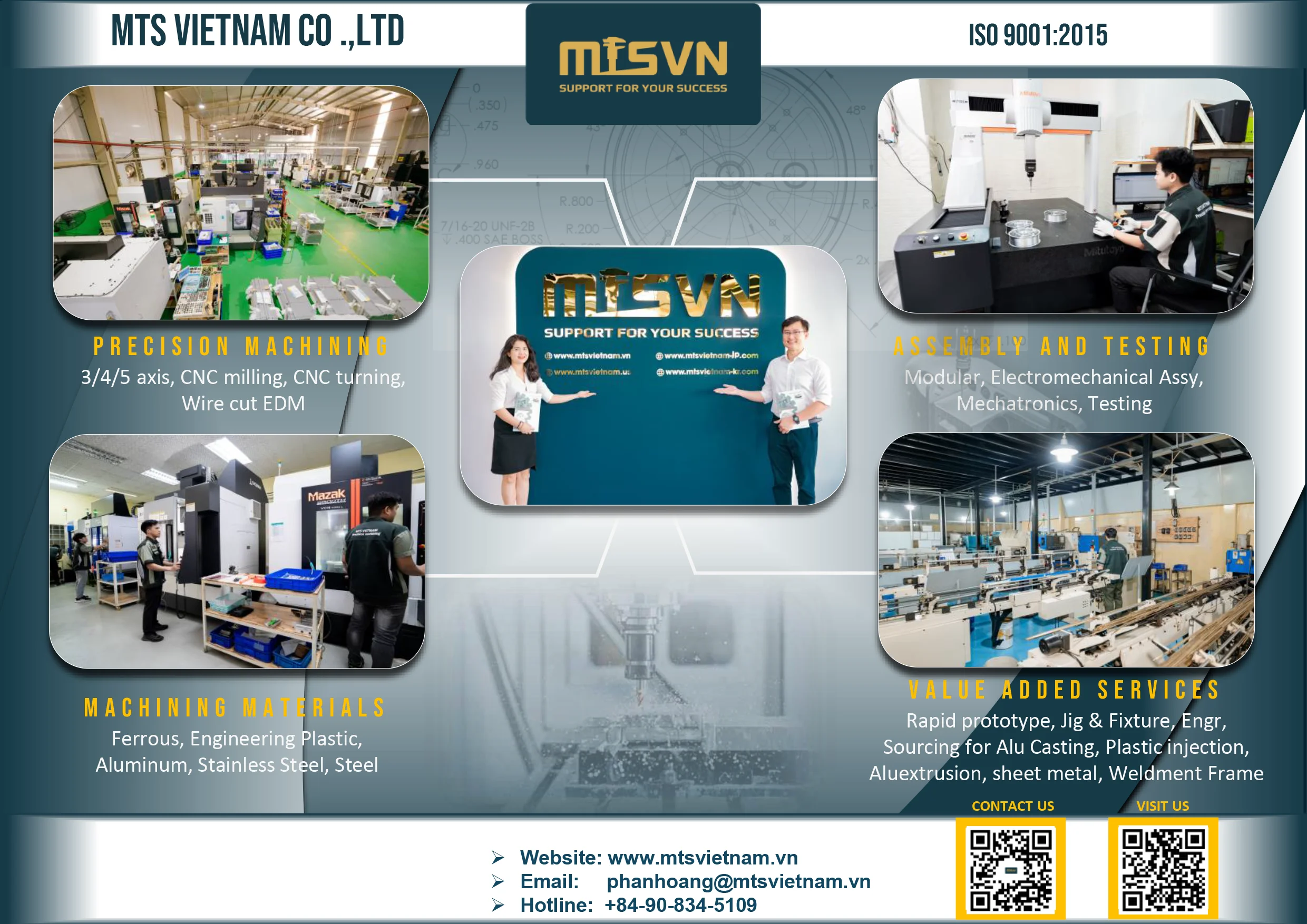
MTS Vietnam is a prominent company specializing in precision mechanical components fabrication. Established in 2017, it has quickly become a reputable name in the Vietnamese and Southeast Asian markets. The company's expertise lies in CNC milling and turning parts made from a variety of materials, including Aluminum, Steel, Stainless, POM, and other engineering plastics. MTS Vietnam is dedicated to supporting the success of its customers and strives to be a leading company in the field of precision mechanical processing both in Vietnam and internationally.
In addition to its fabrication services, MTS Vietnam offers assembly services for components and machines, as well as CNC program services. This comprehensive range of services is aimed at providing optimal solutions and benefits to its customers through the company's ecosystem and strengths. MTS Vietnam emphasizes the importance of investing in new technology and quality control equipment to ensure that it can deliver merchandise at competitive prices and within the required deadlines.
WORKSHOP: 248/10 ĐT743A Street, Binh Thung 1 Quarter, Dong Hoa Ward, Ho Chi Minh City, Vietnam
Tel/zalo/viber: 0908.345.109
Email: phanhoang@mtsvietnam.vn | info@mtsvietnam.vn
Website: www.mtsvietnam.vn (Global Market) | www.mtsvietnam-jp.com (日本)
For USA Sales, please contact MTS USA at:
Tel/zalo/viber: 978-777-1716
Email: sales@mts-usasales.com
Website: www.mtsvietnam.us (US Market)