Introduction
Coating and painting are essential surface treatment techniques used in various industries to enhance the aesthetic appeal, durability, and performance of metal parts and other materials. These processes involve applying a protective or decorative layer to the surface, which can protect against corrosion, wear, and environmental damage. This article explores the processes, benefits, applications, and significance of coating and painting in the manufacturing industry.
Understanding the Coating and Painting Processes
Coating and painting involve applying a material to the surface of a substrate to protect, enhance, or decorate it. These processes can be broken down into several key steps:
- Surface Preparation:
- Objective: Ensure the surface is clean and free of contaminants.
- Methods: Sandblasting, degreasing, and chemical cleaning are commonly used to remove dirt, oil, rust, and old coatings.
- Priming:
- Objective: Provide a base layer that improves adhesion and enhances the protective qualities of the topcoat.
- Methods: Primers are applied using brushes, rollers, or spray equipment.
- Application of Coating/Paint:
- Objective: Apply the protective or decorative layer to the surface.
- Methods: Techniques include spraying, dipping, brushing, and rolling. The choice of method depends on the type of coating, the size of the part, and the desired finish.
- Curing/Drying:
- Objective: Harden the applied coating or paint to form a durable, protective layer.
- Methods: This can be achieved through air drying, baking in an oven, or using UV light, depending on the type of coating or paint used.
- Inspection and Quality Control:
- Objective: Ensure the coating or paint has been applied correctly and meets the required standards.
- Methods: Visual inspections, thickness measurements, and adhesion tests are conducted to verify the quality of the finished surface.
Types of Coating and Painting
- Powder Coating:
- Process: A dry powder is electrostatically applied to the surface and then cured under heat to form a hard, protective layer.
- Benefits: Provides a durable, high-quality finish with excellent resistance to chipping, scratching, and fading.
- Liquid Coating:
- Process: Liquid paint is sprayed, brushed, or rolled onto the surface and then allowed to dry or cure.
- Benefits: Offers a wide range of colors and finishes, and can be applied to various substrates.
- Electroplating:
- Process: A thin layer of metal is deposited onto the surface using an electrochemical process.
- Benefits: Enhances corrosion resistance, wear resistance, and aesthetic appeal.
- Anodizing:
- Process: An electrochemical process that forms a protective oxide layer on the surface of aluminum.
- Benefits: Increases corrosion resistance, surface hardness, and allows for coloring.
- Hot-Dip Galvanizing:
- Process: Steel parts are dipped in molten zinc to form a protective coating.
- Benefits: Provides excellent corrosion resistance, especially for outdoor applications.
- UV Coating:
- Process: A coating is applied and then cured using ultraviolet light.
- Benefits: Offers rapid curing, high gloss, and good abrasion resistance.
Benefits of Coating and Painting
- Corrosion Protection:
Coatings and paints provide a barrier that protects the underlying material from moisture, chemicals, and environmental factors that cause corrosion. - Enhanced Durability:
These treatments improve the wear and abrasion resistance of surfaces, extending the lifespan of components and structures. - Aesthetic Appeal:
Coatings and paints are available in a wide variety of colors, finishes, and textures, allowing for customization and improved visual appeal. - Environmental Resistance:
Treated surfaces can withstand harsh environmental conditions, including UV radiation, extreme temperatures, and chemical exposure. - Ease of Maintenance:
Coated and painted surfaces are easier to clean and maintain, reducing the need for frequent repairs or replacements. - Improved Performance:
Specific coatings can enhance surface properties such as friction, conductivity, and thermal resistance, improving overall performance.
Applications of Coating and Painting
- Automotive Industry:
- Applications: Body panels, frames, wheels, and interior components.
- Benefits: Provides corrosion resistance, enhances appearance, and improves durability.
- Aerospace Industry:
- Applications: Aircraft frames, engines, and interior fittings.
- Benefits: Protects against harsh environmental conditions and improves the longevity and performance of aircraft components.
- Construction Industry:
- Applications: Structural steel, roofing, and exterior facades.
- Benefits: Offers protection against weathering and corrosion, and provides aesthetic customization.
- Consumer Goods:
- Applications: Appliances, electronics, and furniture.
- Benefits: Enhances visual appeal, provides protection, and ensures product longevity.
- Industrial Equipment:
- Applications: Machinery, tools, and equipment housings.
- Benefits: Improves resistance to wear and environmental damage, ensuring reliable operation.
- Marine Industry:
- Applications: Ships, offshore platforms, and marine equipment.
- Benefits: Protects against saltwater corrosion and harsh marine environments.
Conclusion
Coating and painting are key surface treatment techniques that offer numerous benefits, including enhanced corrosion protection, durability, and aesthetic appeal. Their versatility and effectiveness make them essential in various industries, from automotive and aerospace to consumer goods and construction. As technology advances, coating and painting processes will continue to evolve, further expanding their capabilities and ensuring the reliability and longevity of treated surfaces in the manufacturing landscape.
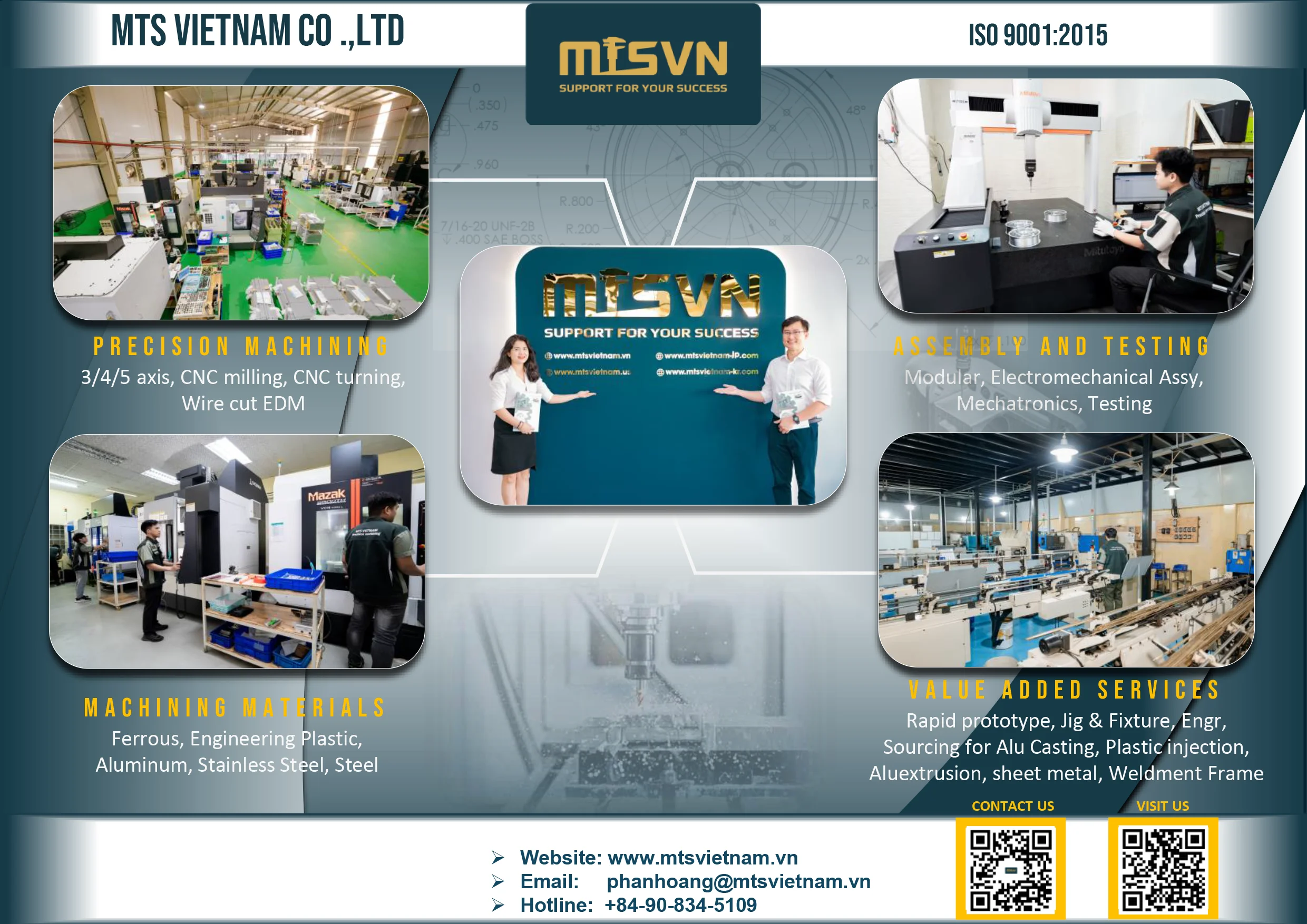
MTS Vietnam is a prominent company specializing in precision mechanical components fabrication. Established in 2017, it has quickly become a reputable name in the Vietnamese and Southeast Asian markets. The company's expertise lies in CNC milling and turning parts made from a variety of materials, including Aluminum, Steel, Stainless, POM, and other engineering plastics. MTS Vietnam is dedicated to supporting the success of its customers and strives to be a leading company in the field of precision mechanical processing both in Vietnam and internationally.
In addition to its fabrication services, MTS Vietnam offers assembly services for components and machines, as well as CNC program services. This comprehensive range of services is aimed at providing optimal solutions and benefits to its customers through the company's ecosystem and strengths. MTS Vietnam emphasizes the importance of investing in new technology and quality control equipment to ensure that it can deliver merchandise at competitive prices and within the required deadlines.
WORKSHOP: 248/10 ĐT743A Street, Binh Thung 1 Quarter, Dong Hoa Ward, Ho Chi Minh City, Vietnam
Tel/zalo/viber: 0908.345.109
Email: phanhoang@mtsvietnam.vn | info@mtsvietnam.vn
Website: www.mtsvietnam.vn (Global Market) | www.mtsvietnam-jp.com (日本)
For USA Sales, please contact MTS USA at:
Tel/zalo/viber: 978-777-1716
Email: sales@mts-usasales.com
Website: www.mtsvietnam.us (US Market)