Introduction
Adhesive bonding is a critical assembly technique used in the manufacturing industry to join materials by applying a liquid or semi-liquid substance that hardens to form a strong bond. This method is particularly valued for its ability to bond a wide variety of materials, including metals, plastics, composites, and ceramics, without altering their inherent properties. This article explores the adhesive bonding process, its benefits, applications, and its essential role in modern manufacturing and assembly.
Understanding the Adhesive Bonding Process
Adhesive bonding involves several steps to ensure a strong and durable joint:
- Surface Preparation:
- Objective: Ensure the surfaces to be bonded are clean and properly prepared.
- Methods: Surfaces are cleaned to remove contaminants such as dust, oil, and oxidation. Mechanical abrasion or chemical treatments may be used to increase surface roughness, improving adhesion.
- Adhesive Application:
- Objective: Apply the adhesive evenly to the surfaces to be bonded.
- Methods: Adhesives can be applied using brushes, rollers, spray guns, or automated dispensing systems, depending on the adhesive type and the application requirements.
- Assembly:
- Objective: Join the parts together and ensure proper alignment.
- Methods: The parts are pressed together with the adhesive in place, ensuring even distribution and adequate contact between surfaces.
- Curing:
- Objective: Allow the adhesive to harden and form a strong bond.
- Methods: Curing can occur at room temperature or through the application of heat, pressure, or UV light, depending on the adhesive type.
- Inspection and Testing:
- Objective: Verify the quality and integrity of the bonded joint.
- Methods: Non-destructive testing methods, such as visual inspection, ultrasonic testing, and pull-off tests, are used to ensure the bond meets required standards.
Types of Adhesives
- Epoxy Adhesives:
- Characteristics: Strong, durable, and resistant to environmental factors.
- Applications: Commonly used in aerospace, automotive, and construction industries for bonding metals, plastics, and composites.
- Acrylic Adhesives:
- Characteristics: Fast-curing, strong, and resistant to impact and vibration.
- Applications: Used in automotive, electronics, and signage industries for bonding metals, plastics, and glass.
- Polyurethane Adhesives:
- Characteristics: Flexible, durable, and resistant to moisture and chemicals.
- Applications: Suitable for bonding wood, plastics, and metals in construction, automotive, and furniture industries.
- Silicone Adhesives:
- Characteristics: Highly flexible, heat-resistant, and resistant to weathering and UV light.
- Applications: Used in electronics, automotive, and construction industries for bonding glass, metals, and plastics.
- Cyanoacrylate Adhesives (Super Glue):
- Characteristics: Fast-curing and strong, suitable for small and precise applications.
- Applications: Commonly used in electronics, medical devices, and consumer products for bonding plastics, rubber, and metals.
- Hot Melt Adhesives:
- Characteristics: Fast-setting, flexible, and easy to apply.
- Applications: Used in packaging, textiles, and woodworking industries for bonding a wide range of materials.
Benefits of Adhesive Bonding
- Material Versatility:
Adhesive bonding can join dissimilar materials, such as metals to plastics, without compromising their properties. - Stress Distribution:
Adhesives distribute stress evenly across the bonded joint, reducing the risk of localized failure and enhancing overall structural integrity. - Aesthetic Advantages:
Adhesive bonding does not require mechanical fasteners, resulting in clean, smooth surfaces without holes or protrusions. - Vibration and Noise Dampening:
Adhesives can absorb vibrations and reduce noise, making them ideal for applications where noise reduction is essential. - Corrosion Resistance:
Adhesive bonds can create a seal that protects against environmental factors, such as moisture and chemicals, preventing corrosion. - Ease of Automation:
Adhesive application processes can be easily automated, improving production efficiency and consistency.
Applications of Adhesive Bonding
- Automotive Industry:
- Applications: Bonding body panels, interior trim, glass, and structural components.
- Benefits: Provides strong, lightweight joints that improve vehicle performance and reduce manufacturing costs.
- Aerospace Industry:
- Applications: Bonding composite materials, structural components, and interior fittings.
- Benefits: Ensures high-strength, lightweight connections essential for aircraft performance and fuel efficiency.
- Electronics Industry:
- Applications: Assembling circuit boards, enclosures, and electronic components.
- Benefits: Provides precise, reliable bonds that ensure electrical insulation and durability.
- Construction Industry:
- Applications: Bonding glass, metal, and composite panels, and insulation materials.
- Benefits: Offers strong, durable joints that withstand environmental stresses and improve building aesthetics.
- Medical Devices:
- Applications: Bonding components in medical instruments, devices, and equipment.
- Benefits: Ensures biocompatibility and reliability, critical for patient safety and device performance.
- Consumer Goods:
- Applications: Assembling household appliances, furniture, and sports equipment.
- Benefits: Provides strong, durable bonds that enhance product quality and longevity.
Conclusion
Adhesive bonding is a key assembly technique that offers numerous benefits, including the ability to join dissimilar materials, distribute stress evenly, and provide clean, smooth surfaces. Its versatility, strength, and ease of automation make it an essential method in various industries, from automotive and aerospace to electronics and construction. As technology advances, adhesive bonding processes will continue to evolve, further expanding their capabilities and applications in the manufacturing landscape.
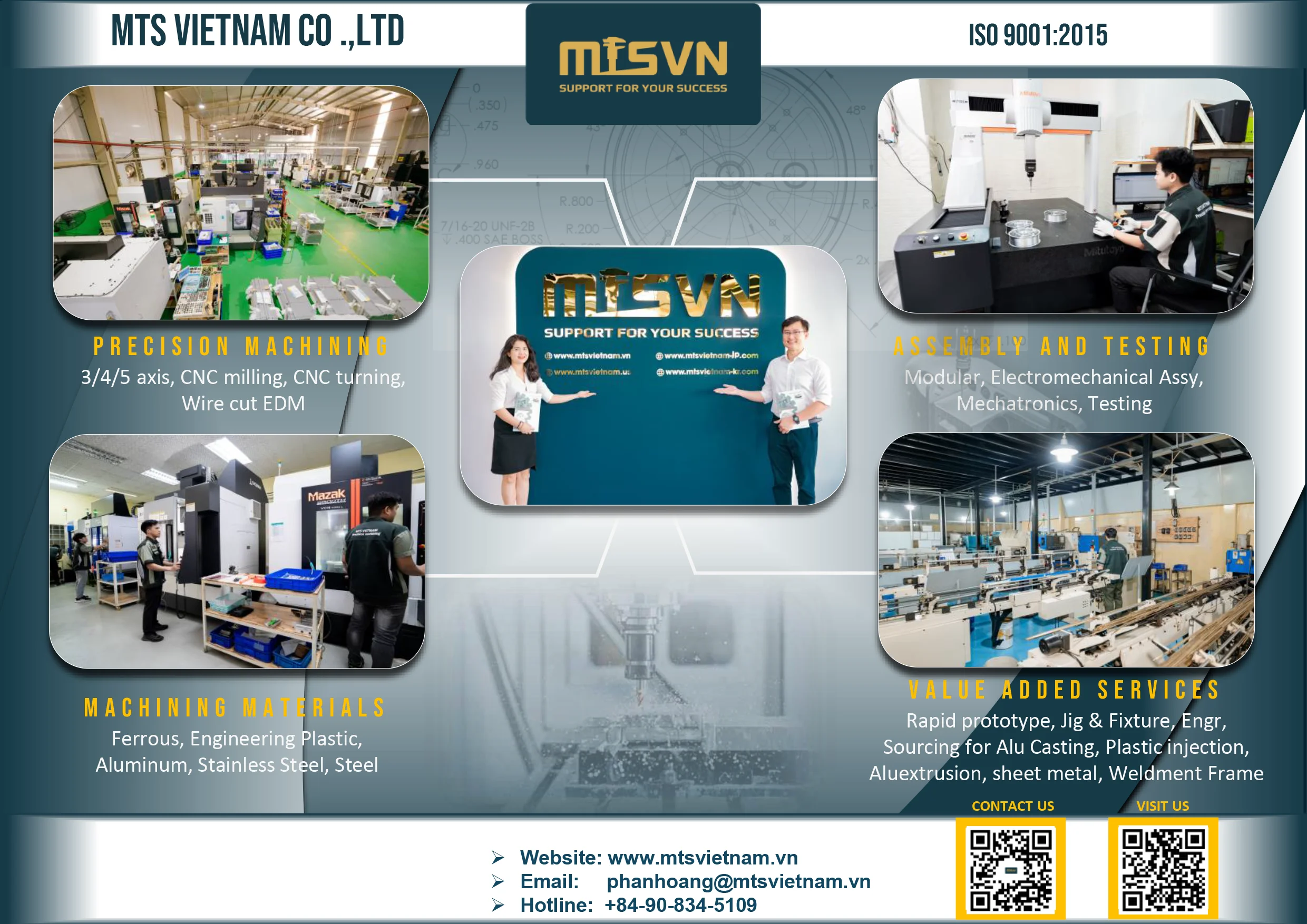
MTS Vietnam is a prominent company specializing in precision mechanical components fabrication. Established in 2017, it has quickly become a reputable name in the Vietnamese and Southeast Asian markets. The company's expertise lies in CNC milling and turning parts made from a variety of materials, including Aluminum, Steel, Stainless, POM, and other engineering plastics. MTS Vietnam is dedicated to supporting the success of its customers and strives to be a leading company in the field of precision mechanical processing both in Vietnam and internationally.
In addition to its fabrication services, MTS Vietnam offers assembly services for components and machines, as well as CNC program services. This comprehensive range of services is aimed at providing optimal solutions and benefits to its customers through the company's ecosystem and strengths. MTS Vietnam emphasizes the importance of investing in new technology and quality control equipment to ensure that it can deliver merchandise at competitive prices and within the required deadlines.
WORKSHOP: 248/10 ĐT743A Street, Binh Thung 1 Quarter, Dong Hoa Ward, Ho Chi Minh City, Vietnam
Tel/zalo/viber: 0908.345.109
Email: phanhoang@mtsvietnam.vn | info@mtsvietnam.vn
Website: www.mtsvietnam.vn (Global Market) | www.mtsvietnam-jp.com (日本)
For USA Sales, please contact MTS USA at:
Tel/zalo/viber: 978-777-1716
Email: sales@mts-usasales.com
Website: www.mtsvietnam.us (US Market)