Introduction
The automotive industry heavily relies on surface treatment and assembly techniques to enhance the performance, durability, and aesthetics of vehicles. Precision mechanics play a critical role in manufacturing high-quality automotive components that meet stringent safety and performance standards. This article explores the importance of surface treatment and assembly processes in the automotive industry, their applications, and their contributions to the overall quality and reliability of vehicles.
Importance of Surface Treatment in the Automotive Industry
Surface treatments are essential in the automotive industry for improving the properties of metal and composite components. These treatments enhance corrosion resistance, wear resistance, and overall durability, ensuring that parts can withstand the harsh conditions they encounter during their lifecycle. Key surface treatment techniques used in the automotive industry include:
- Electroplating
- Process: Deposits a thin layer of metal onto the surface of a part through an electrochemical process.
- Benefits: Enhances corrosion resistance, wear resistance, and provides an attractive finish.
- Applications: Commonly used for bumpers, trim, and various metal components.
- Powder Coating
- Process: Applies a dry powder to the surface, which is then cured under heat to form a hard, protective layer.
- Benefits: Provides a durable, high-quality finish with excellent resistance to chipping, scratching, and fading.
- Applications: Used for wheels, chassis components, and suspension parts.
- Anodizing
- Process: An electrochemical treatment that forms a protective oxide layer on aluminum parts.
- Benefits: Increases corrosion resistance, surface hardness, and allows for coloring.
- Applications: Used for aluminum components such as body panels and trim.
- Galvanizing
- Process: Coats steel parts with a layer of zinc to protect against corrosion.
- Benefits: Provides long-term protection against rust and corrosion, especially in harsh environments.
- Applications: Used for structural components, underbody parts, and exhaust systems.
- Passivation
- Process: Treats stainless steel with an acid solution to remove contaminants and enhance corrosion resistance.
- Benefits: Improves corrosion resistance and surface cleanliness.
- Applications: Used for fuel system components, engine parts, and fasteners.
Importance of Assembly in the Automotive Industry
Assembly processes in the automotive industry ensure that components are accurately and securely joined, maintaining the integrity and performance of the entire vehicle. Precision and reliability are paramount, given the critical nature of automotive applications. Key assembly techniques used in the automotive industry include:
- Mechanical Fastening:
- Methods: Uses bolts, screws, and rivets to join parts.
- Benefits: Provides strong, reliable joints that can be disassembled for maintenance and repairs.
- Applications: Used for assembling body panels, interior trim, and structural components.
- Welding:
- Methods: Joins metal parts by melting and fusing them together.
- Benefits: Creates strong, permanent joints with minimal added weight.
- Applications: Commonly used for body frames, chassis, and exhaust systems.
- Adhesive Bonding:
- Methods: Uses adhesives to bond materials.
- Benefits: Distributes stress evenly, bonds dissimilar materials, and provides a smooth surface finish.
- Applications: Used for bonding glass, composites, and interior panels.
- Soldering and Brazing:
- Methods: Joins parts using a filler metal with a lower melting point than the base materials.
- Benefits: Creates strong joints without melting the base materials, suitable for delicate parts.
- Applications: Used for electrical connections, radiators, and heat exchangers.
- Press-Fit Assembly:
- Methods: Uses interference fits to join parts by applying pressure.
- Benefits: Provides strong, reliable joints without additional materials.
- Applications: Used for bearings, bushings, and gear assemblies.
Applications of Surface Treatment and Assembly in Automotive Components
- Body Panels and Frames:
- Surface Treatment: Electroplating and powder coating protect against corrosion and enhance appearance.
- Assembly: Welding and mechanical fastening ensure structural integrity and durability.
- Engine Components:
- Surface Treatment: Passivation and galvanizing protect against heat and corrosion.
- Assembly: Brazing and adhesive bonding provide strong, heat-resistant joints for engine parts.
- Suspension and Chassis:
- Surface Treatment: Powder coating and galvanizing provide wear and corrosion resistance.
- Assembly: Welding and press-fit assembly ensure robust, reliable connections.
- Interior and Exterior Trim:
- Surface Treatment: Anodizing and electroplating enhance appearance and durability.
- Assembly: Mechanical fastening and adhesive bonding provide secure, aesthetically pleasing joints.
- Electrical Systems:
- Surface Treatment: Electroplating improves electrical conductivity and corrosion resistance.
- Assembly: Soldering ensures reliable electrical connections and component stability.
Conclusion
Surface treatment and assembly processes are critical in the automotive industry, ensuring that components meet high standards of performance, durability, and aesthetics. Techniques such as electroplating, powder coating, welding, and adhesive bonding play a vital role in protecting and joining automotive parts, contributing to the overall quality and reliability of vehicles. As technology advances, these processes will continue to evolve, further enhancing their capabilities and expanding their applications in the automotive industry.
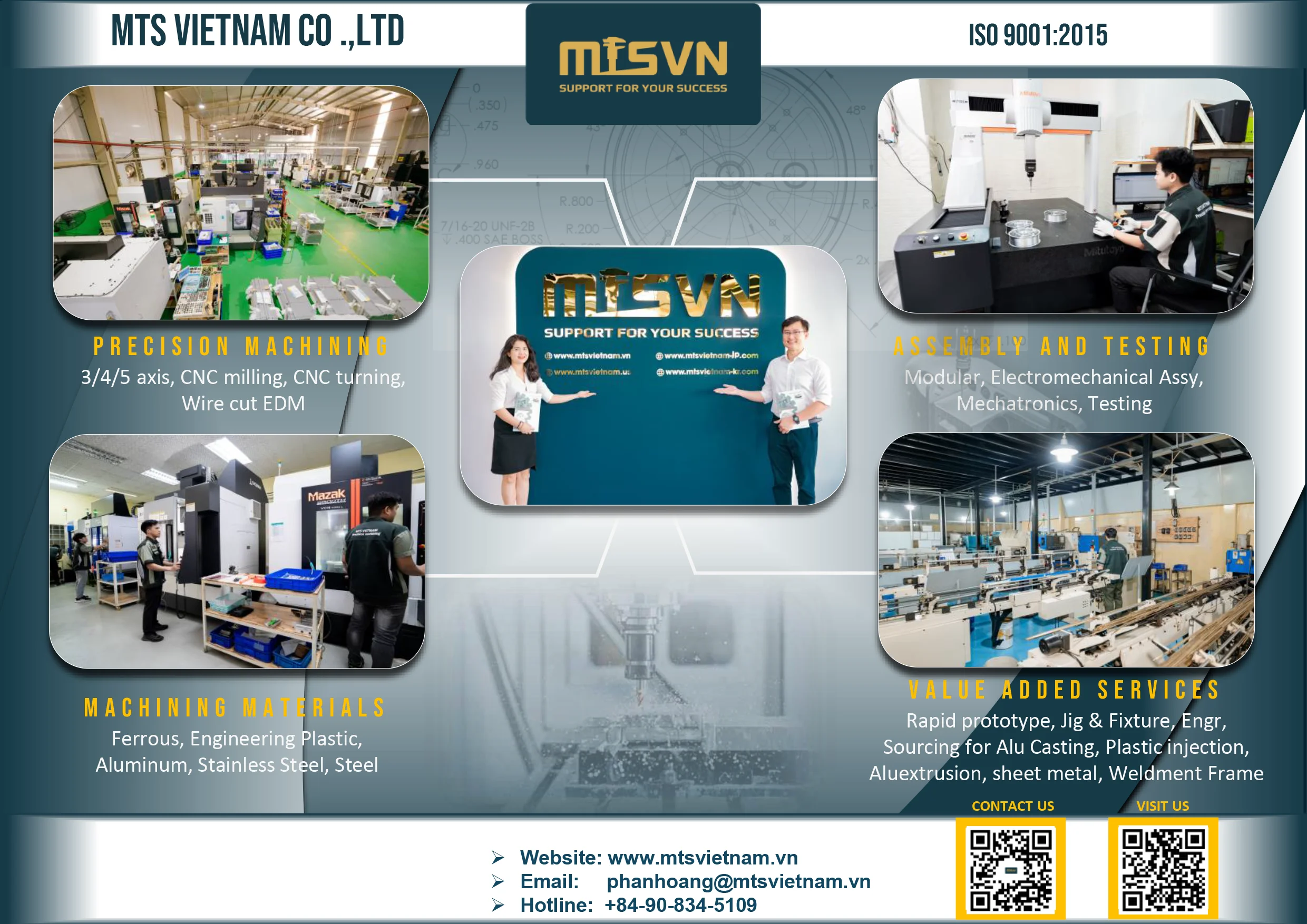
MTS Vietnam is a prominent company specializing in precision mechanical components fabrication. Established in 2017, it has quickly become a reputable name in the Vietnamese and Southeast Asian markets. The company's expertise lies in CNC milling and turning parts made from a variety of materials, including Aluminum, Steel, Stainless, POM, and other engineering plastics. MTS Vietnam is dedicated to supporting the success of its customers and strives to be a leading company in the field of precision mechanical processing both in Vietnam and internationally.
In addition to its fabrication services, MTS Vietnam offers assembly services for components and machines, as well as CNC program services. This comprehensive range of services is aimed at providing optimal solutions and benefits to its customers through the company's ecosystem and strengths. MTS Vietnam emphasizes the importance of investing in new technology and quality control equipment to ensure that it can deliver merchandise at competitive prices and within the required deadlines.
WORKSHOP: 248/10 ĐT743A Street, Binh Thung 1 Quarter, Dong Hoa Ward, Ho Chi Minh City, Vietnam
Tel/zalo/viber: 0908.345.109
Email: phanhoang@mtsvietnam.vn | info@mtsvietnam.vn
Website: www.mtsvietnam.vn (Global Market) | www.mtsvietnam-jp.com (日本)
For USA Sales, please contact MTS USA at:
Tel/zalo/viber: 978-777-1716
Email: sales@mts-usasales.com
Website: www.mtsvietnam.us (US Market)