Introduction
Sheet-metal parts are a fundamental component in the mechanical industry, prized for their various beneficial properties. Among these, strength and durability stand out as crucial factors contributing to their importance. This article explores how the inherent strength and durability of sheet-metal parts enhance their significance in mechanical engineering, ensuring reliability and longevity in various applications.
Understanding Strength and Durability in Sheet-Metal Parts
Strength refers to the ability of a material to withstand forces without deforming or breaking, while durability denotes the material's ability to endure wear, pressure, or damage over time. These properties are critical in mechanical applications where components must perform reliably under various stresses and environmental conditions.
Factors Contributing to Strength and Durability
- Material Composition: The strength and durability of sheet-metal parts largely depend on the materials used. Commonly used metals include:
- Steel: Known for its high tensile strength and toughness, making it ideal for structural and load-bearing applications.
- Aluminum: Offers a good strength-to-weight ratio and excellent corrosion resistance, suitable for aerospace and automotive industries.
- Stainless Steel: Combines strength with resistance to corrosion and staining, often used in medical devices and food processing equipment.
- Titanium: Exceptional strength-to-weight ratio and corrosion resistance, perfect for aerospace and medical implants.
- Manufacturing Processes: Various manufacturing techniques enhance the strength and durability of sheet-metal parts:
- Cold Working: Processes such as rolling, drawing, and pressing increase the metal's hardness and strength through plastic deformation.
- Heat Treatment: Techniques like annealing, quenching, and tempering modify the metal's microstructure to improve its mechanical properties.
- Alloying: Adding elements like chromium, nickel, and manganese to base metals enhances their strength and durability.
- Design and Engineering: The design and engineering of sheet-metal parts also play a vital role in their strength and durability:
- Structural Design: Using principles of engineering design to distribute stress evenly and avoid weak points.
- Thickness and Reinforcements: Varying the thickness of the sheet metal and adding reinforcements in critical areas to improve strength.
Applications Demonstrating Strength and Durability
- Automotive Industry: Sheet-metal parts are essential in the automotive industry for manufacturing car bodies, chassis, and engine components. Their strength ensures the vehicle's structural integrity, while their durability guarantees longevity despite exposure to harsh conditions.
- Aerospace Industry: The aerospace sector demands materials that can withstand extreme forces and environmental conditions. Sheet-metal parts made from aluminum and titanium offer the necessary strength and durability for aircraft structures, ensuring safety and performance.
- Construction Industry: In construction, sheet-metal parts are used for building frameworks, roofing, and cladding. Steel, in particular, provides the strength required for load-bearing structures, while its durability ensures a long lifespan for buildings.
- Industrial Equipment: Heavy machinery and industrial equipment rely on sheet-metal parts for their structural components and protective enclosures. The robustness of these parts ensures reliable operation and resistance to wear and tear.
- Medical Devices: The medical industry uses sheet-metal parts in surgical instruments, medical implants, and equipment housings. Materials like stainless steel and titanium provide the necessary strength and durability to ensure safety and performance in critical applications.
- Consumer Electronics: Sheet-metal parts are used in the manufacture of electronic devices, providing sturdy enclosures and components that protect delicate internal parts and withstand daily use.
Conclusion
The strength and durability of sheet-metal parts are fundamental reasons for their importance in the mechanical industry. These properties ensure that sheet-metal components can withstand the demanding conditions of various applications, providing reliability and longevity. As industries continue to evolve, the need for strong and durable materials like sheet metal will remain critical, reinforcing their role as indispensable elements in mechanical engineering and manufacturing.
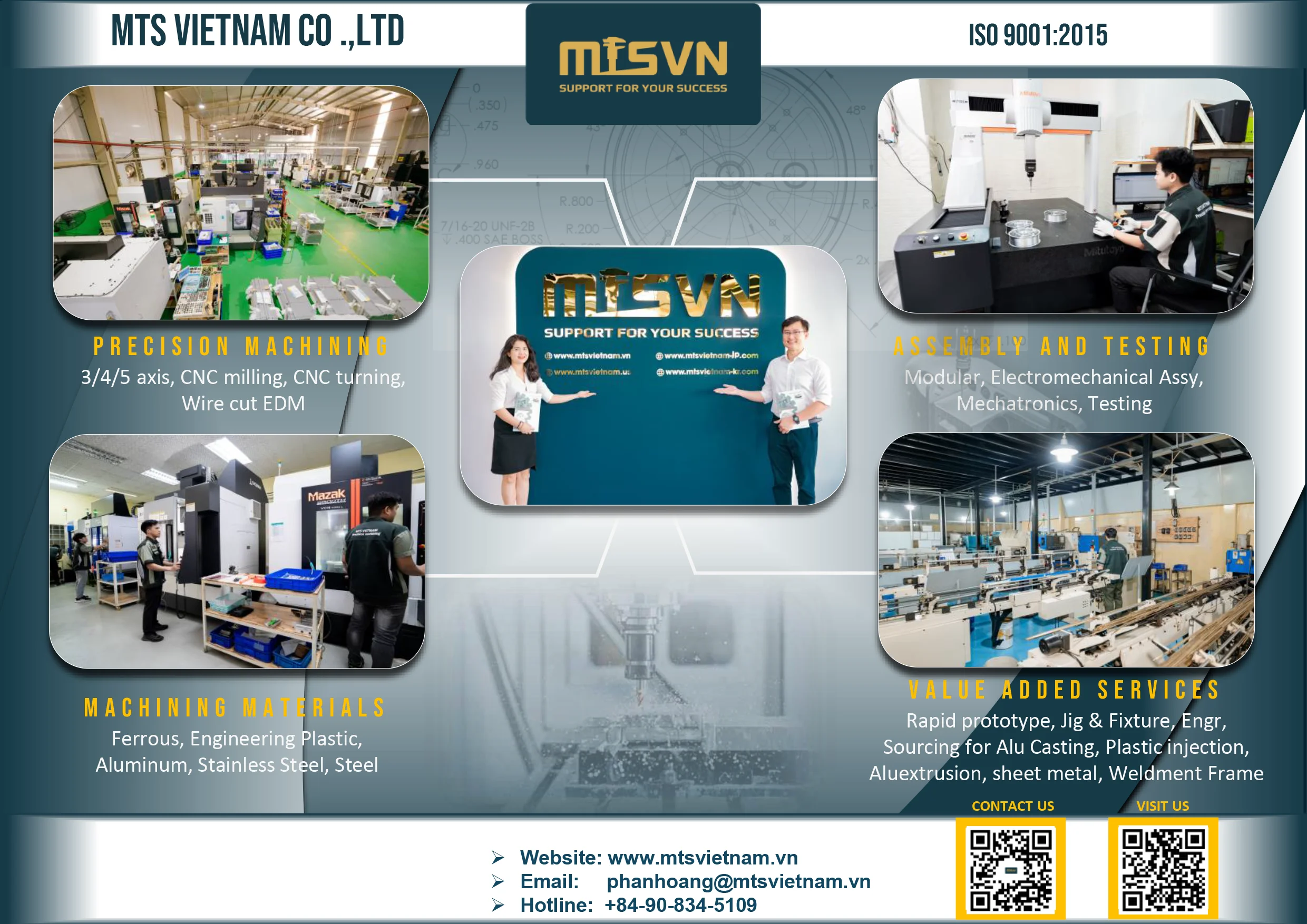
MTS Vietnam is a prominent company specializing in precision mechanical components fabrication. Established in 2017, it has quickly become a reputable name in the Vietnamese and Southeast Asian markets. The company's expertise lies in CNC milling and turning parts made from a variety of materials, including Aluminum, Steel, Stainless, POM, and other engineering plastics. MTS Vietnam is dedicated to supporting the success of its customers and strives to be a leading company in the field of precision mechanical processing both in Vietnam and internationally.
In addition to its fabrication services, MTS Vietnam offers assembly services for components and machines, as well as CNC program services. This comprehensive range of services is aimed at providing optimal solutions and benefits to its customers through the company's ecosystem and strengths. MTS Vietnam emphasizes the importance of investing in new technology and quality control equipment to ensure that it can deliver merchandise at competitive prices and within the required deadlines.
WORKSHOP: 248/10 ĐT743A Street, Binh Thung 1 Quarter, Dong Hoa Ward, Ho Chi Minh City, Vietnam
Tel/zalo/viber: 0908.345.109
Email: phanhoang@mtsvietnam.vn | info@mtsvietnam.vn
Website: www.mtsvietnam.vn (Global Market) | www.mtsvietnam-jp.com (日本)
For USA Sales, please contact MTS USA at:
Tel/zalo/viber: 978-777-1716
Email: sales@mts-usasales.com
Website: www.mtsvietnam.us (US Market)