Introduction
Soldering and brazing are vital assembly techniques used to join metals and other materials in various industries. Both methods involve the use of a filler metal to create strong, durable joints without melting the base materials. These techniques are essential for applications requiring precise, reliable connections. This article explores the soldering and brazing processes, their benefits, applications, and their critical role in manufacturing and assembly.
Understanding Soldering and Brazing Processes
Both soldering and brazing use filler metals to bond materials, but they differ in the temperatures used and the types of filler metals applied:
- Soldering
- Process: Soldering involves melting a filler metal, known as solder, which has a lower melting point than the base metals. The solder flows into the joint by capillary action and solidifies, creating a bond.
- Temperature: Typically performed at temperatures below 450°C (842°F).
- Filler Metals: Common solders include tin-lead, lead-free alloys (such as tin-silver-copper), and silver-based solders.
- Applications: Used in electronics, plumbing, and jewelry making.
- Brazing
- Process: Brazing involves melting a filler metal that has a higher melting point than solder but still lower than the base metals. The filler metal flows into the joint by capillary action and solidifies, forming a strong bond.
- Temperature: Typically performed at temperatures above 450°C (842°F) but below the melting point of the base metals.
- Filler Metals: Common brazing alloys include brass, silver, copper, and aluminum.
- Applications: Used in HVAC systems, automotive, aerospace, and metalworking.
- Strong Joints:
Both techniques produce strong, reliable joints capable of withstanding significant mechanical stresses. - Low Heat Requirement:
Since the base materials do not melt, these methods minimize thermal distortion and preserve the properties of the base metals. - Versatility:
Soldering and brazing can join a wide range of metals and dissimilar materials, including metals to ceramics and metals to glass. - Precision:
These techniques allow for precise control over the amount of filler metal and the size of the joint, making them ideal for delicate and intricate assemblies. - Corrosion Resistance:
The use of specific filler metals can enhance the corrosion resistance of the joint, extending the life of the assembly. - Ease of Automation:
Both processes can be automated for high-volume production, improving efficiency and consistency. - Electronics Industry:
- Applications: Assembling circuit boards, connectors, and electronic components.
- Benefits: Provides precise, reliable connections that ensure electrical conductivity and durability.
- Plumbing and HVAC Systems:
- Applications: Joining pipes, fittings, and heat exchangers.
- Benefits: Produces leak-proof, corrosion-resistant joints capable of withstanding high pressures and temperatures.
- Automotive Industry:
- Applications: Manufacturing radiators, fuel lines, and heat exchangers.
- Benefits: Ensures strong, durable joints that can withstand thermal cycling and mechanical stresses.
- Aerospace Industry:
- Applications: Fabricating and repairing components such as turbine blades, fuel systems, and structural assemblies.
- Benefits: Provides lightweight, high-strength joints essential for aircraft performance and safety.
- Jewelry Making:
- Applications: Joining precious metals and creating intricate designs.
- Benefits: Allows for precise, delicate joints without damaging the base materials.
- Metalworking:
- Applications: Assembling metal art, sculptures, and decorative items.
- Benefits: Offers flexibility in joining various metals and creating strong, aesthetically pleasing joints.
- Temperature: Soldering operates at lower temperatures (below 450°C), while brazing works at higher temperatures (above 450°C).
- Strength: Brazed joints are generally stronger than soldered joints due to the higher melting point of the filler metals used in brazing.
- Applications: Soldering is commonly used in electronics and plumbing, where lower temperatures are advantageous. Brazing is preferred in applications requiring high-strength joints, such as automotive and aerospace components.
Benefits of Soldering and Brazing
Applications of Soldering and Brazing
Differences Between Soldering and Brazing
While both soldering and brazing involve similar principles, their differences make them suitable for distinct applications:
Conclusion
Soldering and brazing are key assembly techniques that offer numerous benefits, including strong, reliable joints, versatility, and precision. Their ability to join a wide range of materials and create durable connections makes them essential in various industries, from electronics and plumbing to automotive and aerospace. As technology advances, soldering and brazing processes will continue to evolve, further enhancing their capabilities and expanding their applications in the manufacturing landscape.
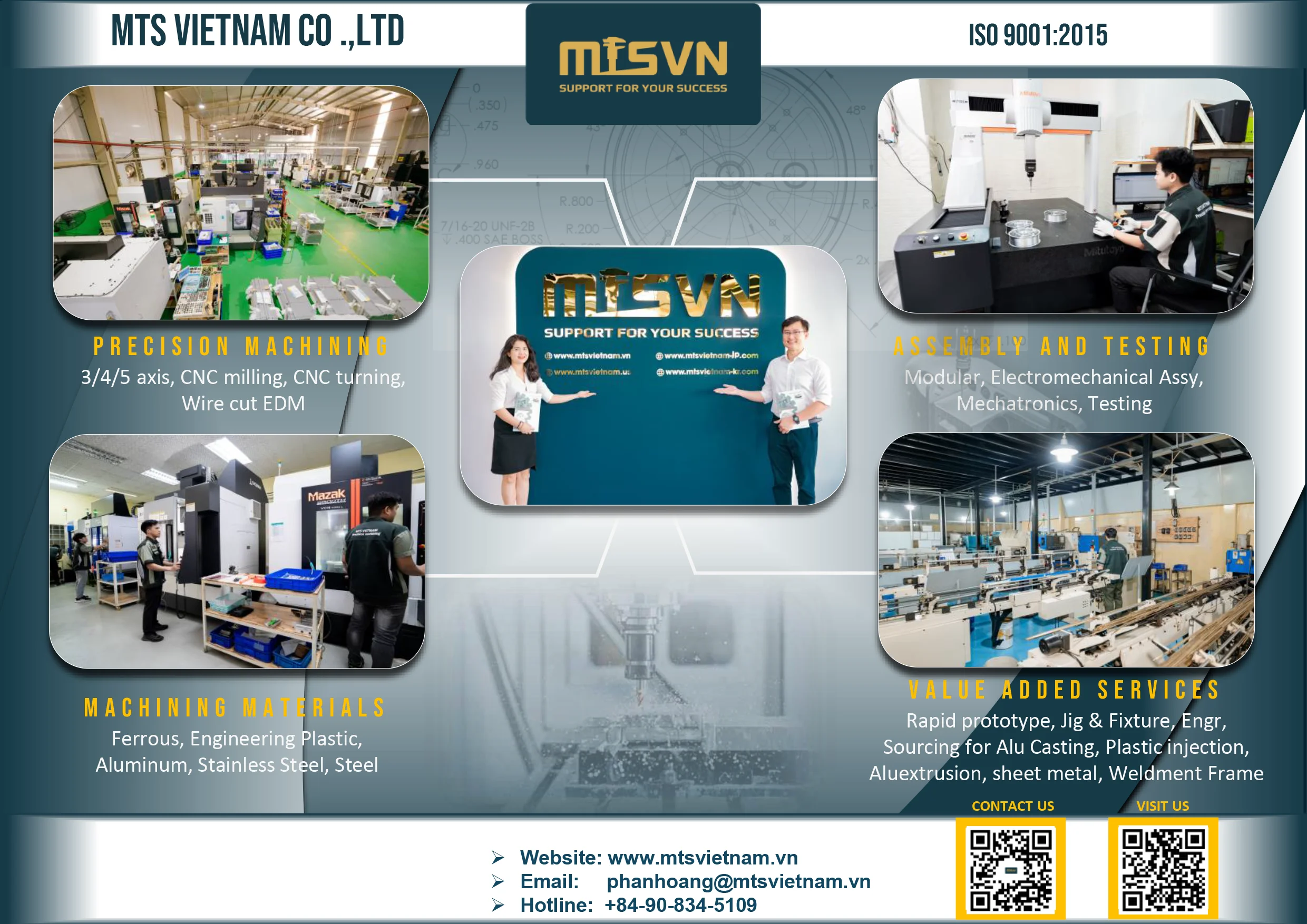
MTS Vietnam is a prominent company specializing in precision mechanical components fabrication. Established in 2017, it has quickly become a reputable name in the Vietnamese and Southeast Asian markets. The company's expertise lies in CNC milling and turning parts made from a variety of materials, including Aluminum, Steel, Stainless, POM, and other engineering plastics. MTS Vietnam is dedicated to supporting the success of its customers and strives to be a leading company in the field of precision mechanical processing both in Vietnam and internationally.
In addition to its fabrication services, MTS Vietnam offers assembly services for components and machines, as well as CNC program services. This comprehensive range of services is aimed at providing optimal solutions and benefits to its customers through the company's ecosystem and strengths. MTS Vietnam emphasizes the importance of investing in new technology and quality control equipment to ensure that it can deliver merchandise at competitive prices and within the required deadlines.
WORKSHOP: 248/10 ĐT743A Street, Binh Thung 1 Quarter, Dong Hoa Ward, Ho Chi Minh City, Vietnam
Tel/zalo/viber: 0908.345.109
Email: phanhoang@mtsvietnam.vn | info@mtsvietnam.vn
Website: www.mtsvietnam.vn (Global Market) | www.mtsvietnam-jp.com (日本)
For USA Sales, please contact MTS USA at:
Tel/zalo/viber: 978-777-1716
Email: sales@mts-usasales.com
Website: www.mtsvietnam.us (US Market)