Introduction
The medical field is one of the most demanding sectors in terms of quality, precision, and reliability. Precision machining in the mechanical industry plays a vital role in producing high-quality medical devices and components that meet stringent regulatory standards. This article explores the importance of machining parts in the medical field, the role of precision mechanics, and the applications of these components in various medical devices and equipment.
Importance of Precision Machining in the Medical Field
- High Standards of Quality and Safety:
- Requirement: Medical devices must meet rigorous quality and safety standards to ensure they function correctly and safely.
- Solution: Precision machining provides the accuracy and consistency required to meet these standards, ensuring that medical components are free from defects and perform reliably.
- Complex Geometries:
- Requirement: Many medical devices have intricate and complex geometries that are essential for their function.
- Solution: Advanced machining techniques can produce these complex shapes with high precision, enabling the creation of sophisticated medical devices.
- Biocompatibility:
- Requirement: Materials used in medical devices must be biocompatible to avoid adverse reactions when implanted in or used on the human body.
- Solution: Precision machining ensures that components made from biocompatible materials, such as titanium and certain grades of stainless steel, meet the required specifications.
- Miniaturization:
- Requirement: The trend towards minimally invasive procedures drives the need for smaller and more precise medical components.
- Solution: Precision mechanics can produce miniaturized components with tight tolerances, essential for modern medical devices.
Precision Machining Techniques in the Medical Field
- CNC Machining:
- Description: Computer Numerical Control (CNC) machining uses computer-controlled tools to produce parts with high precision.
- Application: Used for manufacturing components such as surgical instruments, orthopedic implants, and dental devices.
- Electrical Discharge Machining (EDM):
- Description: EDM uses electrical discharges to erode material from a workpiece, ideal for hard materials and intricate shapes.
- Application: Produces fine details in components like cardiovascular stents and implantable devices.
- Laser Machining:
- Description: Uses focused laser beams to cut or engrave materials with high precision.
- Application: Ideal for creating detailed features on medical devices such as catheters and microfluidic devices.
- Ultrasonic Machining:
- Description: Uses high-frequency ultrasonic vibrations to remove material, suitable for brittle materials.
- Application: Machining of ceramic components used in medical imaging equipment.
- Lapping and Polishing:
- Description: Involves fine abrasives to achieve smooth and flat surfaces.
- Application: Produces high-quality finishes on components like lenses for endoscopes and optical devices.
Applications of Machined Parts in Medical Devices
- Surgical Instruments:
- Description: Tools used in surgical procedures, requiring high precision and reliability.
- Machining Role: Producing intricate and sharp features, ensuring durability and sterility.
- Orthopedic Implants:
- Description: Devices such as joint replacements and bone plates used to support or replace damaged bones.
- Machining Role: Manufacturing components with high strength and biocompatibility, ensuring a perfect fit and long-term performance.
- Dental Devices:
- Description: Tools and implants used in dental procedures.
- Machining Role: Creating precise and durable components, such as dental crowns, bridges, and orthodontic devices.
- Cardiovascular Devices:
- Description: Devices such as stents, pacemakers, and heart valves used in cardiovascular treatments.
- Machining Role: Ensuring high precision and biocompatibility, critical for devices implanted in the cardiovascular system.
- Diagnostic Equipment:
- Description: Devices used for medical diagnostics, such as MRI machines and ultrasound equipment.
- Machining Role: Producing high-precision components that ensure the accuracy and reliability of diagnostic readings.
Challenges and Solutions in Machining Medical Parts
- Maintaining Biocompatibility:
- Challenge: Ensuring that materials remain biocompatible throughout the machining process.
- Solution: Using appropriate machining techniques and maintaining stringent cleanliness standards to prevent contamination.
- Achieving Tight Tolerances:
- Challenge: Meeting the tight tolerances required for medical components.
- Solution: Utilizing advanced CNC machines and precision tooling, along with rigorous quality control measures.
- Surface Finish Quality:
- Challenge: Ensuring high-quality surface finishes to prevent tissue damage and ensure device functionality.
- Solution: Employing fine abrasives, polishing processes, and precision lapping to achieve smooth surfaces.
- Material Handling:
- Challenge: Machining hard or brittle materials used in medical devices.
- Solution: Using specialized machining techniques such as EDM and ultrasonic machining to handle challenging materials effectively.
Conclusion
Precision machining is indispensable in the medical field, providing the high-quality, reliable, and intricate components necessary for advanced medical devices. Techniques such as CNC machining, EDM, laser machining, ultrasonic machining, and lapping and polishing play critical roles in producing surgical instruments, orthopedic implants, dental devices, cardiovascular devices, and diagnostic equipment. As the medical industry continues to evolve, the importance of precision machining in developing and manufacturing cutting-edge medical technology will only grow, driving innovation and improving patient outcomes.
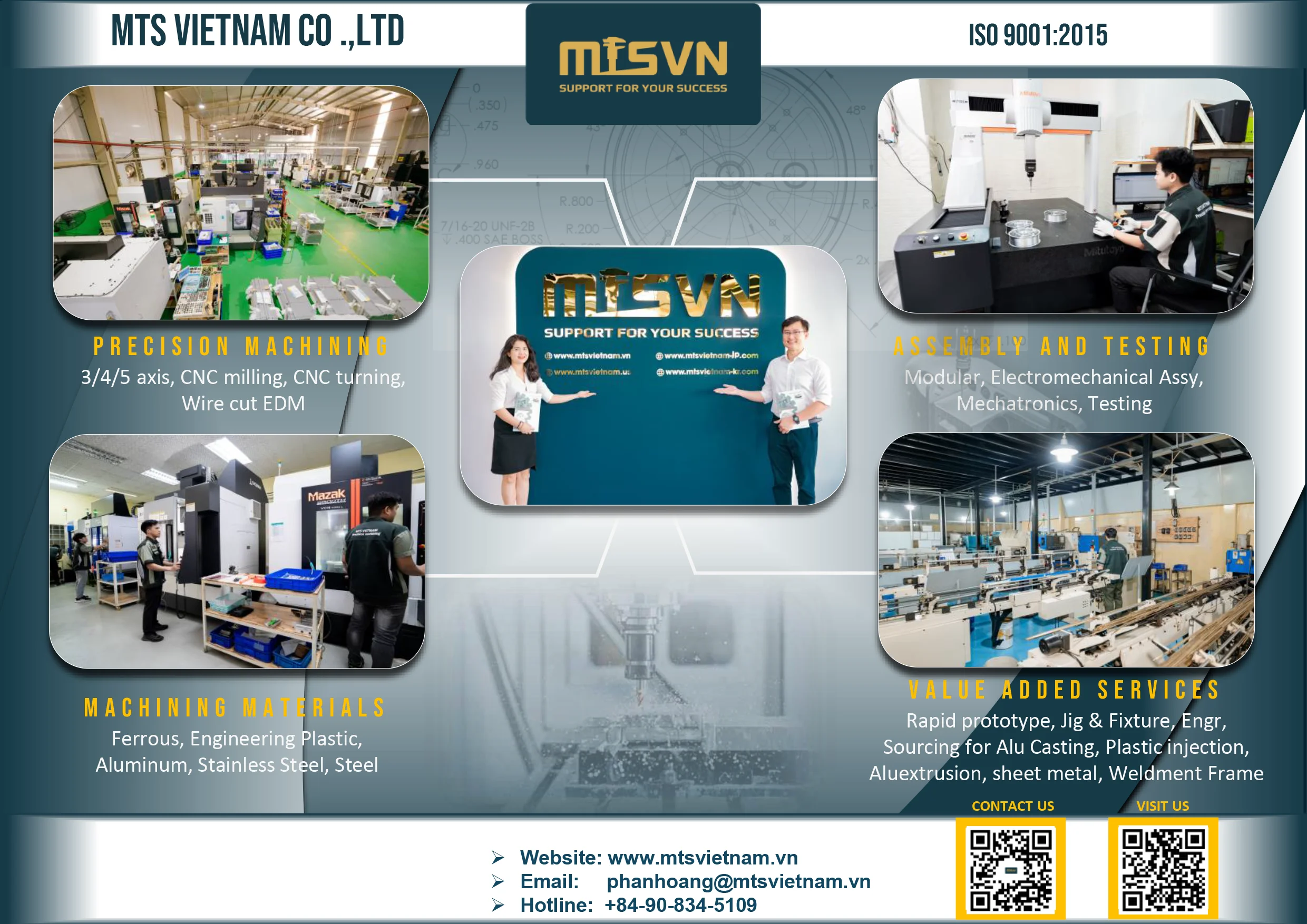
MTS Vietnam is a prominent company specializing in precision mechanical components fabrication. Established in 2017, it has quickly become a reputable name in the Vietnamese and Southeast Asian markets. The company's expertise lies in CNC milling and turning parts made from a variety of materials, including Aluminum, Steel, Stainless, POM, and other engineering plastics. MTS Vietnam is dedicated to supporting the success of its customers and strives to be a leading company in the field of precision mechanical processing both in Vietnam and internationally.
In addition to its fabrication services, MTS Vietnam offers assembly services for components and machines, as well as CNC program services. This comprehensive range of services is aimed at providing optimal solutions and benefits to its customers through the company's ecosystem and strengths. MTS Vietnam emphasizes the importance of investing in new technology and quality control equipment to ensure that it can deliver merchandise at competitive prices and within the required deadlines.
WORKSHOP: 248/10 ĐT743A Street, Binh Thung 1 Quarter, Dong Hoa Ward, Ho Chi Minh City, Vietnam
Tel/zalo/viber: 0908.345.109
Email: phanhoang@mtsvietnam.vn | info@mtsvietnam.vn
Website: www.mtsvietnam.vn (Global Market) | www.mtsvietnam-jp.com (日本)
For USA Sales, please contact MTS USA at:
Tel/zalo/viber: 978-777-1716
Email: sales@mts-usasales.com
Website: www.mtsvietnam.us (US Market)