Introduction
In the realm of manufacturing sheet-metal parts, joining is a fundamental process that involves assembling individual metal pieces into a cohesive unit. This process is crucial in producing complex assemblies that require high structural integrity and reliability. This article explores the various joining techniques used in sheet-metal manufacturing, their applications, and the significance of joining in the industry.
Understanding the Joining Process
Joining in sheet-metal manufacturing refers to methods used to connect metal parts together, forming a single, functional piece. The choice of joining technique depends on factors such as material type, design specifications, load requirements, and production volume. Effective joining ensures the final product's strength, durability, and performance.
Key Joining Techniques
- Welding:
- Process: Welding uses heat and, sometimes, pressure to fuse metal pieces together. Common welding methods include MIG (Metal Inert Gas), TIG (Tungsten Inert Gas), and spot welding.
- Advantages: Produces strong, permanent joints; suitable for various metal types and thicknesses.
- Applications: Widely used in automotive, aerospace, and construction industries for structural and non-structural components.
- Riveting:
- Process: Riveting involves inserting a metal fastener (rivet) through aligned holes in the pieces to be joined and deforming the rivet's end to hold the parts together.
- Advantages: Provides reliable mechanical joints; does not require heat, making it suitable for heat-sensitive materials.
- Applications: Common in aircraft construction, metalworking, and manufacturing of heavy machinery.
- Bolting and Screwing:
- Process: Bolting and screwing use threaded fasteners to hold parts together. Bolts typically require nuts, while screws are self-threading.
- Advantages: Allows for disassembly and reassembly; suitable for joints that may need maintenance or adjustment.
- Applications: Used in machinery, electronics enclosures, and construction.
- Adhesive Bonding:
- Process: Adhesive bonding uses chemical adhesives to join metal surfaces. The adhesives cure to form strong bonds.
- Advantages: Distributes stress evenly across the joint; ideal for joining dissimilar materials.
- Applications: Employed in automotive, aerospace, and consumer electronics industries.
- Brazing and Soldering:
- Process: Brazing and soldering involve melting a filler metal into the joint, which solidifies to bond the pieces. Brazing uses higher temperatures than soldering.
- Advantages: Joins delicate or thin materials without melting the base metals; creates strong, leak-proof joints.
- Applications: Used in plumbing, HVAC systems, and electronics assembly.
Importance of Joining in Manufacturing
- Structural Integrity: Effective joining techniques ensure that the assembled parts maintain their structural integrity, crucial for components subjected to high loads or stresses.
- Design Flexibility: Joining allows for the creation of complex structures from simpler components, providing greater design flexibility and enabling innovative solutions.
- Material Efficiency: By joining parts rather than machining a single piece from a large block of material, manufacturers can reduce waste and lower material costs.
- Ease of Assembly: Many joining techniques, such as bolting and adhesive bonding, simplify the assembly process, making it faster and more cost-effective.
- Maintenance and Repair: Certain joining methods, like bolting and screwing, allow for disassembly, making maintenance and repair easier and more economical.
- Customization: Joining techniques enable customization and modifications, allowing manufacturers to tailor products to specific requirements or make adjustments during the production process.
Applications of Joining in Various Industries
- Automotive Industry: Joining is essential in automotive manufacturing for assembling body panels, frames, engine components, and interior parts. Techniques like welding and adhesive bonding ensure robust and durable joints.
- Aerospace Industry: The aerospace sector relies on precise and strong joints for aircraft structures, engine parts, and fuselage assembly. Riveting and adhesive bonding are commonly used to maintain weight efficiency and structural integrity.
- Construction Industry: In construction, joining techniques are used to assemble steel frameworks, roofing structures, and architectural elements. Welding and bolting are prevalent due to their strength and reliability.
- Electronics Industry: The electronics industry uses joining methods like soldering and adhesive bonding to assemble circuit boards, enclosures, and components, ensuring electrical connectivity and durability.
- Medical Devices: Joining techniques are critical in manufacturing medical devices and equipment, where precision, sterility, and reliability are paramount. Soldering and adhesive bonding are commonly used.
- Consumer Goods: Joining processes are employed in producing a wide range of consumer goods, from appliances and furniture to toys and sports equipment, ensuring product integrity and longevity.
Conclusion
Joining is a critical manufacturing process for sheet-metal parts, providing the strength, flexibility, and efficiency needed to produce complex assemblies. By employing various joining techniques, manufacturers can meet the diverse needs of multiple industries, ensuring that sheet-metal parts continue to play a vital role in mechanical engineering and production. As technology advances, joining methods will evolve, further enhancing their capabilities and importance in the manufacturing landscape.
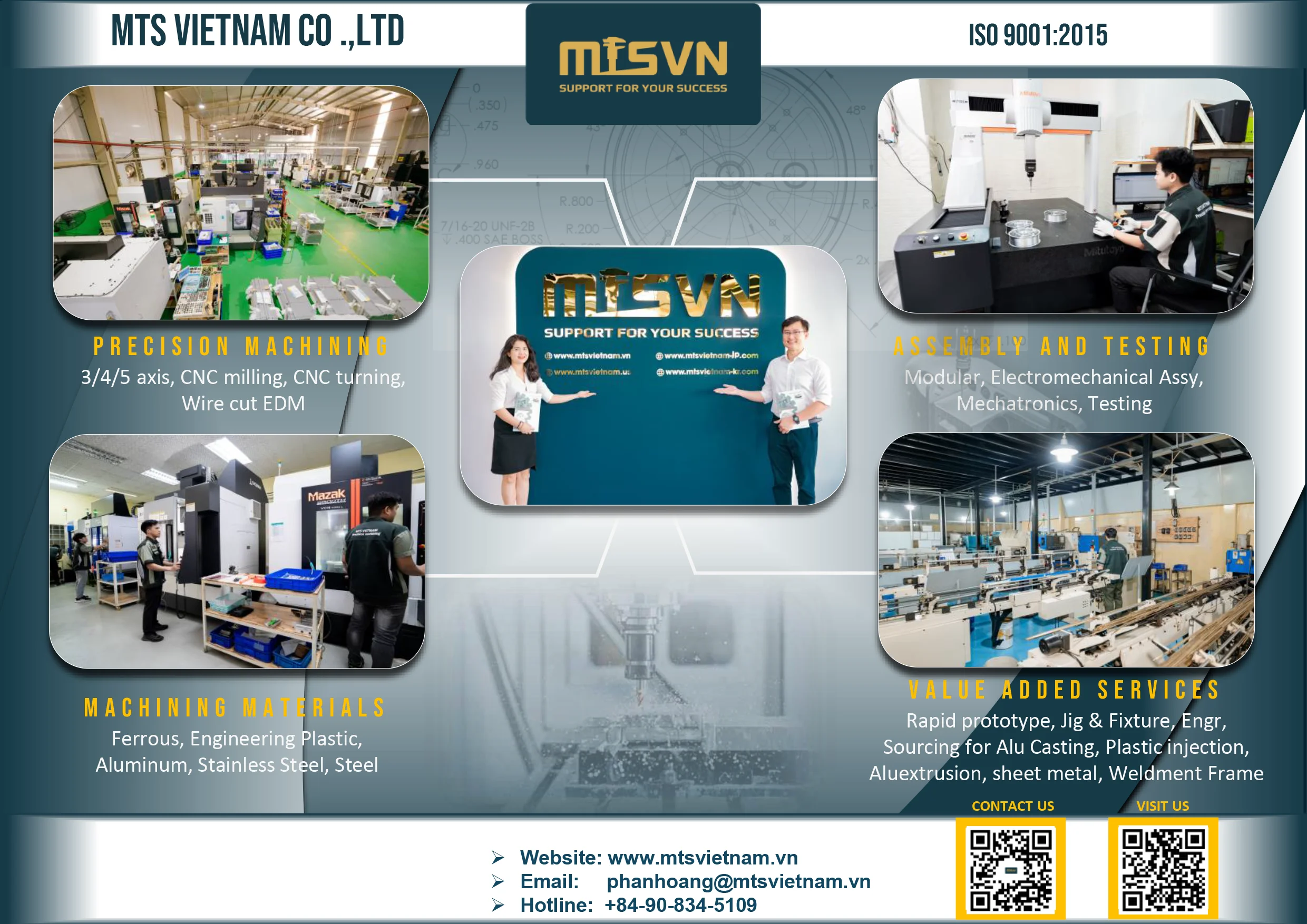
MTS Vietnam is a prominent company specializing in precision mechanical components fabrication. Established in 2017, it has quickly become a reputable name in the Vietnamese and Southeast Asian markets. The company's expertise lies in CNC milling and turning parts made from a variety of materials, including Aluminum, Steel, Stainless, POM, and other engineering plastics. MTS Vietnam is dedicated to supporting the success of its customers and strives to be a leading company in the field of precision mechanical processing both in Vietnam and internationally.
In addition to its fabrication services, MTS Vietnam offers assembly services for components and machines, as well as CNC program services. This comprehensive range of services is aimed at providing optimal solutions and benefits to its customers through the company's ecosystem and strengths. MTS Vietnam emphasizes the importance of investing in new technology and quality control equipment to ensure that it can deliver merchandise at competitive prices and within the required deadlines.
WORKSHOP: 248/10 ĐT743A Street, Binh Thung 1 Quarter, Dong Hoa Ward, Ho Chi Minh City, Vietnam
Tel/zalo/viber: 0908.345.109
Email: phanhoang@mtsvietnam.vn | info@mtsvietnam.vn
Website: www.mtsvietnam.vn (Global Market) | www.mtsvietnam-jp.com (日本)
For USA Sales, please contact MTS USA at:
Tel/zalo/viber: 978-777-1716
Email: sales@mts-usasales.com
Website: www.mtsvietnam.us (US Market)