Introduction
The manufacturing landscape is continuously evolving, driven by the need for greater efficiency, precision, and innovation. One of the emerging trends that is transforming the industry is hybrid manufacturing. Combining the strengths of traditional CNC (Computer Numerical Control) machining with additive manufacturing (3D printing), hybrid manufacturing offers unique advantages that can significantly enhance production capabilities. This article explores the concept of hybrid manufacturing, its benefits, and its potential impact on the future of CNC machining.
Understanding Hybrid Manufacturing
Hybrid manufacturing integrates CNC machining and additive manufacturing into a single process or system. This approach leverages the precision and accuracy of CNC machining with the flexibility and design freedom of 3D printing. By combining these technologies, manufacturers can create complex parts with enhanced functionality and performance that would be difficult or impossible to produce using either method alone.
Key Components of Hybrid Manufacturing
- Additive Manufacturing (3D Printing)
- Subtractive Manufacturing (CNC Machining)
- Integrated Software and Control Systems
Focus: How Hybrid Manufacturing Works
Additive Manufacturing (3D Printing)
Description
Additive manufacturing involves building up layers of material to create a part. This process allows for complex geometries and internal structures that are not achievable with traditional machining. Common materials used in 3D printing include plastics, metals, and composites.
Benefits
- Design Freedom: Ability to create intricate shapes and internal structures.
- Material Efficiency: Minimal waste as material is added only where needed.
- Rapid Prototyping: Fast production of prototypes for testing and development.
Subtractive Manufacturing (CNC Machining)
Description
CNC machining involves removing material from a solid block (workpiece) to create a part. This process is known for its precision, accuracy, and ability to produce high-quality finishes. CNC machining is suitable for a wide range of materials, including metals, plastics, and composites.
Benefits
High Precision and Accuracy: Capable of achieving tight tolerances and fine details.
Consistency and Repeatability: Reliable production of identical parts across multiple runs.
Surface Finish Quality: Produces smooth and precise surface finishes.
Integrated Software and Control Systems
Description
Hybrid manufacturing systems require advanced software and control systems to seamlessly integrate additive and subtractive processes. These systems manage the transition between 3D printing and CNC machining, ensuring precise alignment and coordination.
Benefits
Process Optimization: Streamlines the manufacturing process by combining two technologies into one workflow.
Flexibility: Allows for easy adjustments and modifications during production.
Enhanced Capabilities: Expands the range of possible applications and part designs.
Applications of Hybrid Manufacturing
- Aerospace: Production of lightweight, complex components such as turbine blades and structural parts.
- Medical Devices: Custom implants, prosthetics, and surgical instruments with intricate designs and precise tolerances.
- Automotive: High-performance engine parts, lightweight structural components, and custom interior elements.
- Tooling and Molds: Creation of complex molds and tooling with integrated cooling channels and optimized geometries.
- Electronics: Production of intricate housings, connectors, and heat sinks with enhanced thermal management properties.
Benefits of Hybrid Manufacturing
Increased Design Flexibility: Combines the geometric freedom of additive manufacturing with the precision of CNC machining, allowing for innovative designs and optimized part performance.
Enhanced Material Properties: Ability to combine different materials and manufacturing processes to achieve superior mechanical and thermal properties.
Reduced Lead Times: Streamlined workflow reduces the time required for prototyping and production, accelerating time-to-market for new products.
Cost Efficiency: Minimizes material waste and reduces the need for multiple setups and processes, leading to cost savings.
Improved Part Performance: Hybrid manufacturing can produce parts with complex internal features, lightweight structures, and enhanced functionality.
Challenges and Solutions
Integration Complexity: Combining additive and subtractive processes requires advanced control systems and software. Investing in integrated solutions and training can help overcome this challenge.
Material Compatibility: Ensuring compatibility between different materials used in additive and subtractive processes can be challenging. Research and development of hybrid-compatible materials can address this issue.
Process Optimization: Optimizing the hybrid manufacturing process for specific applications requires careful planning and expertise. Collaboration with industry experts and continuous process improvement can enhance efficiency.
Future Trends in Hybrid Manufacturing
- Advanced Materials: Development of new materials tailored for hybrid manufacturing, combining the best properties of different substances.
- Increased Automation: Integration of robotics and AI to further automate the hybrid manufacturing process, enhancing efficiency and reducing human intervention.
- Smart Manufacturing: Use of IoT and real-time data analytics to monitor and optimize hybrid manufacturing processes, improving quality and productivity.
- Scalability: Development of scalable hybrid manufacturing solutions for large-scale production, making the technology more accessible to a broader range of industries.
Conclusion
Hybrid manufacturing represents a significant advancement in the field of CNC machining, combining the strengths of additive and subtractive processes to create high-performance, complex parts. This approach offers numerous benefits, including increased design flexibility, enhanced material properties, reduced lead times, and cost efficiency. As technology continues to evolve, hybrid manufacturing will play a crucial role in driving innovation and efficiency in the manufacturing industry. Embracing this trend will enable manufacturers to meet the growing demands of modern industries and stay competitive in a rapidly changing landscape.
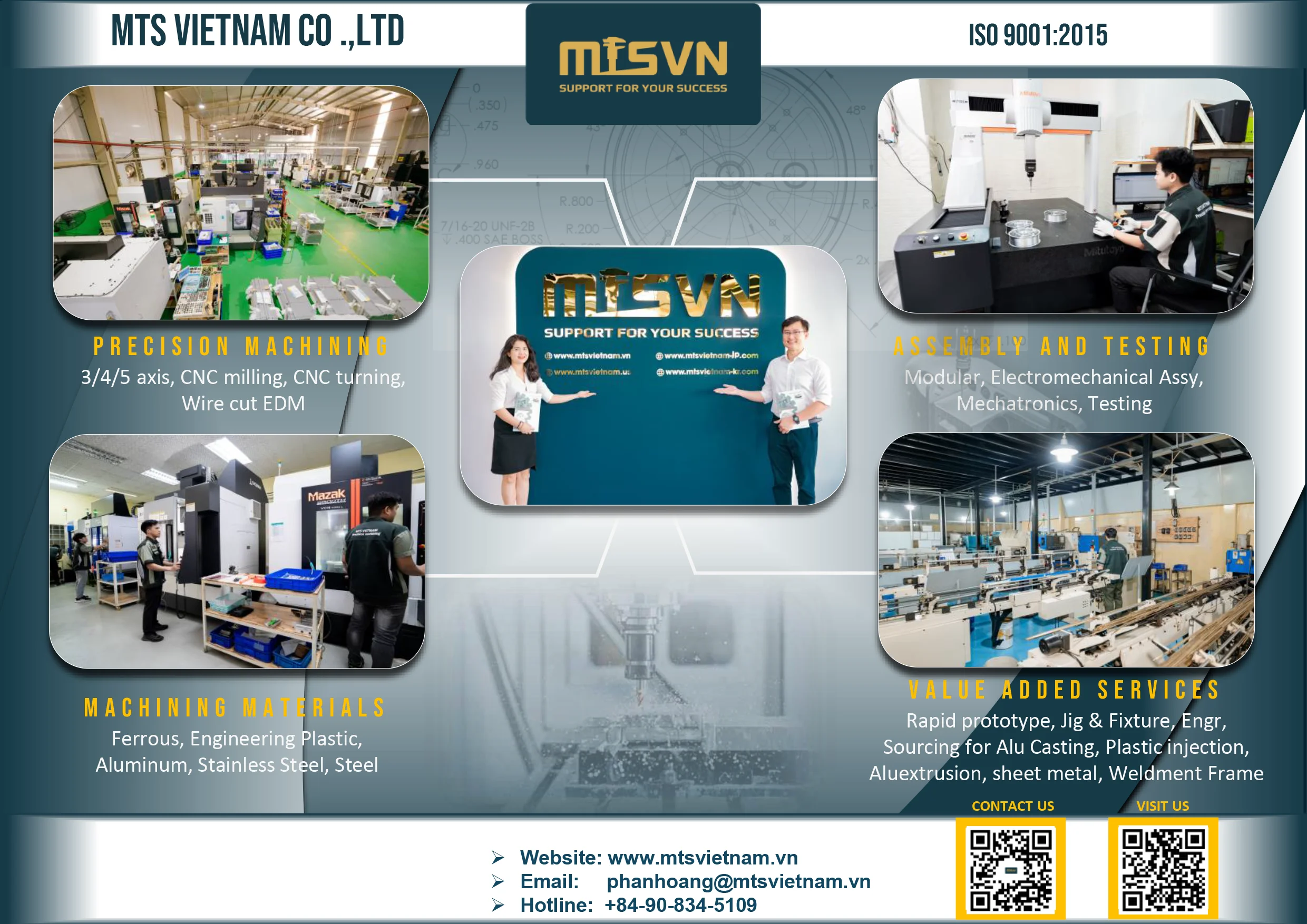
MTS Vietnam is a prominent company specializing in precision mechanical components fabrication. Established in 2017, it has quickly become a reputable name in the Vietnamese and Southeast Asian markets. The company's expertise lies in CNC milling and turning parts made from a variety of materials, including Aluminum, Steel, Stainless, POM, and other engineering plastics. MTS Vietnam is dedicated to supporting the success of its customers and strives to be a leading company in the field of precision mechanical processing both in Vietnam and internationally.
In addition to its fabrication services, MTS Vietnam offers assembly services for components and machines, as well as CNC program services. This comprehensive range of services is aimed at providing optimal solutions and benefits to its customers through the company's ecosystem and strengths. MTS Vietnam emphasizes the importance of investing in new technology and quality control equipment to ensure that it can deliver merchandise at competitive prices and within the required deadlines.
WORKSHOP: 248/10 ĐT743A Street, Binh Thung 1 Quarter, Dong Hoa Ward, Ho Chi Minh City, Vietnam
Tel/zalo/viber: 0908.345.109
Email: phanhoang@mtsvietnam.vn | info@mtsvietnam.vn
Website: www.mtsvietnam.vn (Global Market) | www.mtsvietnam-jp.com (日本)
For USA Sales, please contact MTS USA at:
Tel/zalo/viber: 978-777-1716
Email: sales@mts-usasales.com
Website: www.mtsvietnam.us (US Market)