Introduction
Electrical Discharge Machining (EDM) is a critical precision machining technique widely used in the medical field. It enables the production of intricate and precise medical components that meet the stringent requirements of the industry. This article explores the significance of EDM in the medical field, its benefits, applications, and how it contributes to the production of advanced medical devices.
Understanding Electrical Discharge Machining (EDM)
EDM is a non-traditional machining process that uses electrical discharges (sparks) to remove material from a workpiece. It is particularly effective for machining hard materials and creating complex shapes that are challenging to achieve with conventional machining methods.
- How EDM Works:
- Setup: EDM involves two main components: the electrode (usually made of graphite or copper) and the workpiece. Both are submerged in a dielectric fluid, typically deionized water or oil.
- Operation: A series of electrical discharges occur between the electrode and the workpiece, controlled by a power supply. These discharges generate intense heat, which melts and vaporizes small amounts of the workpiece material.
- Material Removal: The dielectric fluid flushes away the eroded particles, cools the work area, and prevents short circuits by acting as an insulator.
- Types of EDM:
- Wire EDM: Uses a thin, electrically charged wire as the electrode to cut through the workpiece, ideal for producing complex shapes and fine details.
- Sinker EDM: Uses a shaped electrode that is plunged into the workpiece, suitable for creating cavities, molds, and intricate 3D shapes.
Benefits of EDM in the Medical Field
- Machining Hard Materials:
- Benefit: EDM can machine materials that are difficult or impossible to cut with traditional methods, such as titanium, stainless steel, and conductive ceramics.
- Impact: Enables the production of durable and high-performance medical components.
- Complex Geometries:
- Benefit: EDM can produce intricate shapes, fine details, and tight corners with high precision.
- Impact: Essential for creating the complex geometries required in medical devices, such as cardiovascular stents and implantable devices.
- High Precision and Accuracy:
- Benefit: EDM offers exceptional precision and accuracy, capable of achieving tolerances within a few microns.
- Impact: Ensures that medical components meet the stringent specifications necessary for optimal performance and reliability.
- No Mechanical Stress:
- Benefit: EDM is a non-contact machining process, which means there is no physical force applied to the workpiece.
- Impact: Prevents deformation and damage, preserving the integrity of delicate and fragile components.
- Surface Finish:
- Benefit: EDM can achieve excellent surface finishes, often eliminating the need for additional polishing or finishing processes.
- Impact: Enhances the quality and performance of medical components by reducing friction and wear.
Applications of EDM in the Medical Field
- Cardiovascular Devices:
- Description: Devices such as stents, pacemakers, and heart valves used in cardiovascular treatments.
- EDM Role: Produces intricate and precise features, such as tiny holes and complex shapes, essential for the functionality and reliability of these devices.
- Orthopedic Implants:
- Description: Devices such as joint replacements, bone screws, and plates used to support or replace damaged bones.
- EDM Role: Ensures high precision and the ability to machine hard materials like titanium and stainless steel, ensuring a perfect fit and long-term performance.
- Surgical Instruments:
- Description: Tools used in surgical procedures that require high precision and reliability.
- EDM Role: Produces sharp and intricate features on surgical instruments, ensuring durability and sterility.
- Dental Implants and Tools:
- Description: Implants and tools used in dental procedures.
- EDM Role: Creates precise and durable components, such as dental crowns, bridges, and orthodontic devices, ensuring a perfect fit and long-term functionality.
- Microelectromechanical Systems (MEMS):
- Description: Devices that integrate mechanical and electrical components at a microscale.
- EDM Role: Produces intricate and precise features necessary for the functionality of MEMS devices, such as micro-sensors and micro-actuators.
Challenges and Solutions in EDM for the Medical Field
- Material Removal Rate:
- Challenge: EDM can be slower compared to conventional machining methods.
- Solution: Optimization of EDM parameters, such as discharge energy, pulse duration, and dielectric fluid, can improve material removal rates.
- Electrode Wear:
- Challenge: The electrode in EDM can wear down over time, affecting precision and accuracy.
- Solution: Using high-quality electrode materials and optimizing machining parameters can reduce electrode wear and maintain accuracy.
- Thermal Effects:
- Challenge: The intense heat generated by EDM can cause thermal damage to the workpiece.
- Solution: Proper management of dielectric fluid and control of discharge parameters can minimize thermal effects and prevent damage.
- Surface Integrity:
- Challenge: EDM can sometimes leave a recast layer or micro-cracks on the machined surface.
- Solution: Post-processing techniques, such as polishing and surface treatments, can improve surface integrity and eliminate defects.
Conclusion
Electrical Discharge Machining (EDM) is a key precision machining technique in the medical field, offering unparalleled precision, accuracy, and the ability to machine complex geometries and hard materials. Its non-contact nature and exceptional surface finish capabilities make it indispensable for producing high-quality medical components. By enabling the creation of intricate cardiovascular devices, orthopedic implants, surgical instruments, dental implants, and MEMS devices, EDM plays a crucial role in advancing medical technology and improving patient outcomes. As the demand for more sophisticated and reliable medical devices continues to grow, EDM will remain a critical process, driving innovation and excellence in the medical industry.
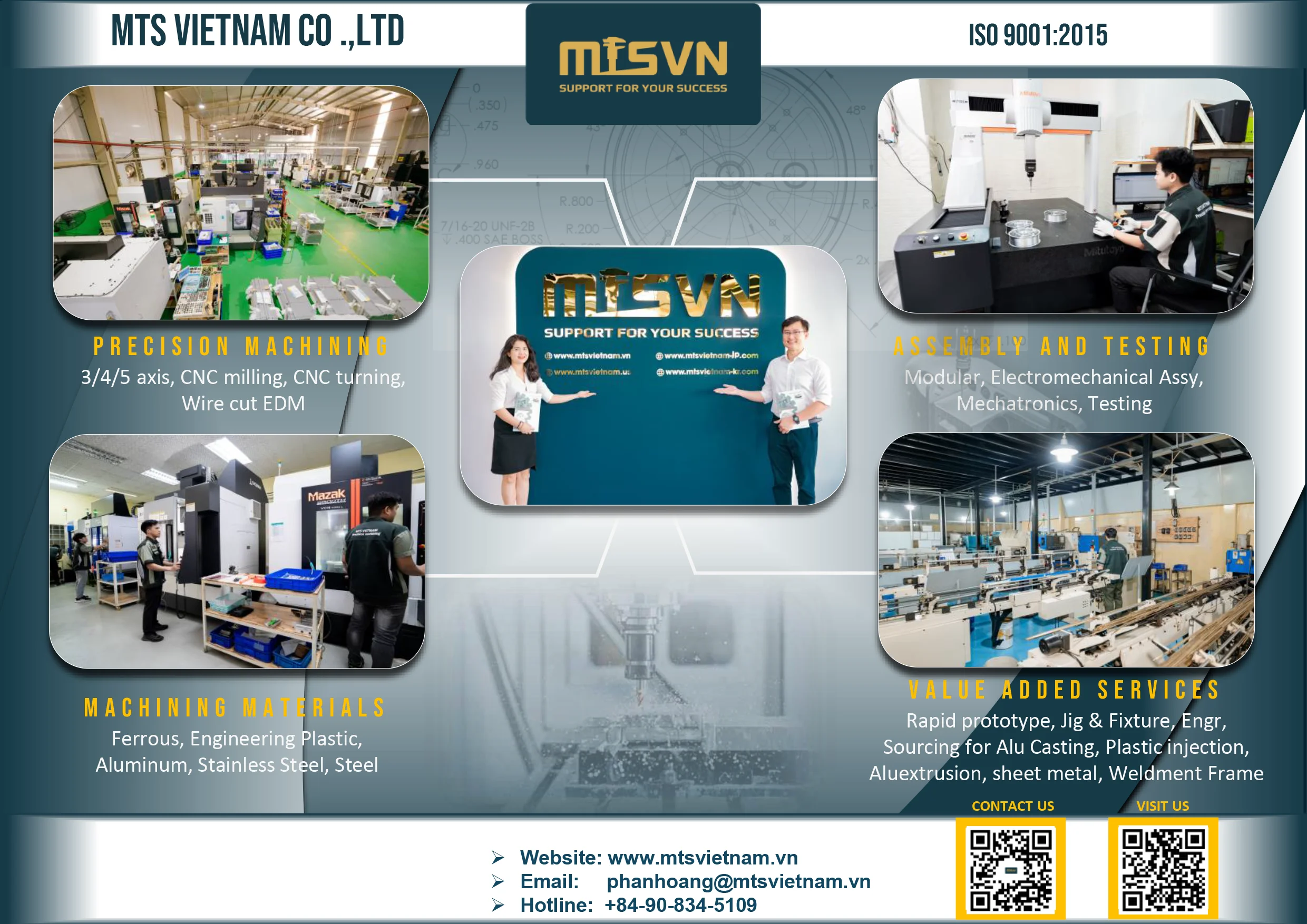
MTS Vietnam is a prominent company specializing in precision mechanical components fabrication. Established in 2017, it has quickly become a reputable name in the Vietnamese and Southeast Asian markets. The company's expertise lies in CNC milling and turning parts made from a variety of materials, including Aluminum, Steel, Stainless, POM, and other engineering plastics. MTS Vietnam is dedicated to supporting the success of its customers and strives to be a leading company in the field of precision mechanical processing both in Vietnam and internationally.
In addition to its fabrication services, MTS Vietnam offers assembly services for components and machines, as well as CNC program services. This comprehensive range of services is aimed at providing optimal solutions and benefits to its customers through the company's ecosystem and strengths. MTS Vietnam emphasizes the importance of investing in new technology and quality control equipment to ensure that it can deliver merchandise at competitive prices and within the required deadlines.
WORKSHOP: 248/10 ĐT743A Street, Binh Thung 1 Quarter, Dong Hoa Ward, Ho Chi Minh City, Vietnam
Tel/zalo/viber: 0908.345.109
Email: phanhoang@mtsvietnam.vn | info@mtsvietnam.vn
Website: www.mtsvietnam.vn (Global Market) | www.mtsvietnam-jp.com (日本)
For USA Sales, please contact MTS USA at:
Tel/zalo/viber: 978-777-1716
Email: sales@mts-usasales.com
Website: www.mtsvietnam.us (US Market)