Introduction
In the competitive landscape of modern manufacturing, efficiency and speed are crucial for maintaining a competitive edge. Computer Numerical Control (CNC) machining stands out for its ability to deliver high efficiency and rapid production times. This article explores how CNC machining achieves these benefits and why they are vital for various industries.
Understanding CNC Machining
CNC machining is a process where pre-programmed computer software controls the movement of factory tools and machinery. This automation allows for the precise and repeatable production of complex parts, which is essential for meeting the high standards of today’s manufacturing demands.
Key Advantages of CNC Machining
- High Precision and Accuracy
- Consistency and Repeatability
- Complex Geometries
- Efficiency and Speed
Focus: Efficiency and Speed
How CNC Machining Enhances Efficiency and Speed
- Automated Processes: CNC machines are highly automated, reducing the need for manual intervention. Once a program is set, the machine can run unattended, freeing up operators to focus on other tasks. This automation significantly increases production efficiency and reduces labor costs.
- Rapid Production: CNC machines can operate at high speeds, cutting and shaping materials much faster than manual methods. This rapid production capability is particularly advantageous for large-scale manufacturing, where time is a critical factor.
- High Throughput: CNC machining allows for continuous operation, including during non-working hours and overnight. This 24/7 production capability maximizes machine utilization and increases overall throughput.
- Quick Changeovers: CNC machines can switch between tasks and setups quickly thanks to their programmable nature. This flexibility reduces downtime between production runs and allows for efficient handling of small batch sizes or custom orders.
- Reduced Setup Times: Advanced CNC software can store multiple programs, enabling quick and easy changeovers. This capability minimizes the time required to set up machines for different jobs, further enhancing efficiency.
- Integrated CAD/CAM Systems: The integration of Computer-Aided Design (CAD) and Computer-Aided Manufacturing (CAM) systems streamlines the design-to-production process. Designs can be directly converted into machining instructions, reducing lead times and enhancing accuracy.
Applications Benefiting from Efficiency and Speed
- Automotive Industry: The automotive sector requires rapid production of high-quality parts to meet market demand. CNC machining enables the efficient production of engine components, transmission parts, and other critical elements, ensuring quick turnaround times and maintaining production schedules.
- Aerospace Industry: In aerospace, where precision and speed are paramount, CNC machining produces complex parts such as turbine blades and structural components efficiently. The ability to quickly produce high-precision parts helps aerospace manufacturers meet stringent deadlines and quality standards.
- Medical Devices: The medical device industry benefits from the quick production of high-precision components needed for surgical instruments, implants, and diagnostic equipment. CNC machining ensures that these parts are produced accurately and efficiently, supporting rapid development and delivery.
- Consumer Electronics: The fast-paced consumer electronics industry relies on CNC machining to produce intricate components for devices like smartphones, laptops, and wearable technology. CNC machining's speed and efficiency help meet the high demand for these products.
- Custom Manufacturing: CNC machining is ideal for custom manufacturing, where small batch sizes and unique designs are common. The ability to quickly switch between different designs and produce parts rapidly makes CNC machining highly suited for this sector.
Benefits of Enhanced Efficiency and Speed
- Cost Savings: Increased efficiency and speed reduce labor costs and production times, leading to significant cost savings. Lower operational costs translate into higher profit margins and more competitive pricing.
- Improved Productivity: The ability to produce parts quickly and consistently enhances overall productivity. Manufacturers can meet tight deadlines and handle larger volumes of work without compromising quality.
- Faster Time-to-Market: CNC machining's rapid production capabilities enable faster time-to-market for new products. This speed is critical in industries where being first can provide a competitive advantage.
- Scalability: The efficiency of CNC machining allows for easy scaling of production. Manufacturers can quickly ramp up production to meet increasing demand without sacrificing quality or incurring excessive costs.
Challenges and Solutions
While the benefits of CNC machining in terms of efficiency and speed are clear, there are challenges to consider:
- Initial Investment: The cost of acquiring CNC machines and software can be high. However, the long-term benefits in efficiency, speed, and quality often outweigh the initial expenditure.
- Skilled Workforce: Operating CNC machines requires specialized skills and training. Investing in comprehensive training programs ensures that operators can maximize the capabilities of CNC technology.
- Maintenance: Regular maintenance is essential to keep CNC machines running efficiently. Implementing a robust maintenance schedule helps prevent downtime and maintain optimal performance.
Conclusion
Efficiency and speed are key advantages of CNC machining, enabling manufacturers to produce high-quality parts quickly and cost-effectively. The automation, rapid production, high throughput, quick changeovers, reduced setup times, and integrated CAD/CAM systems all contribute to these benefits. As industries continue to evolve and demand faster production times, CNC machining will remain a crucial technology for maintaining competitiveness and meeting market demands. Embracing CNC machining’s capabilities can lead to significant improvements in productivity, cost savings, and overall operational efficiency.
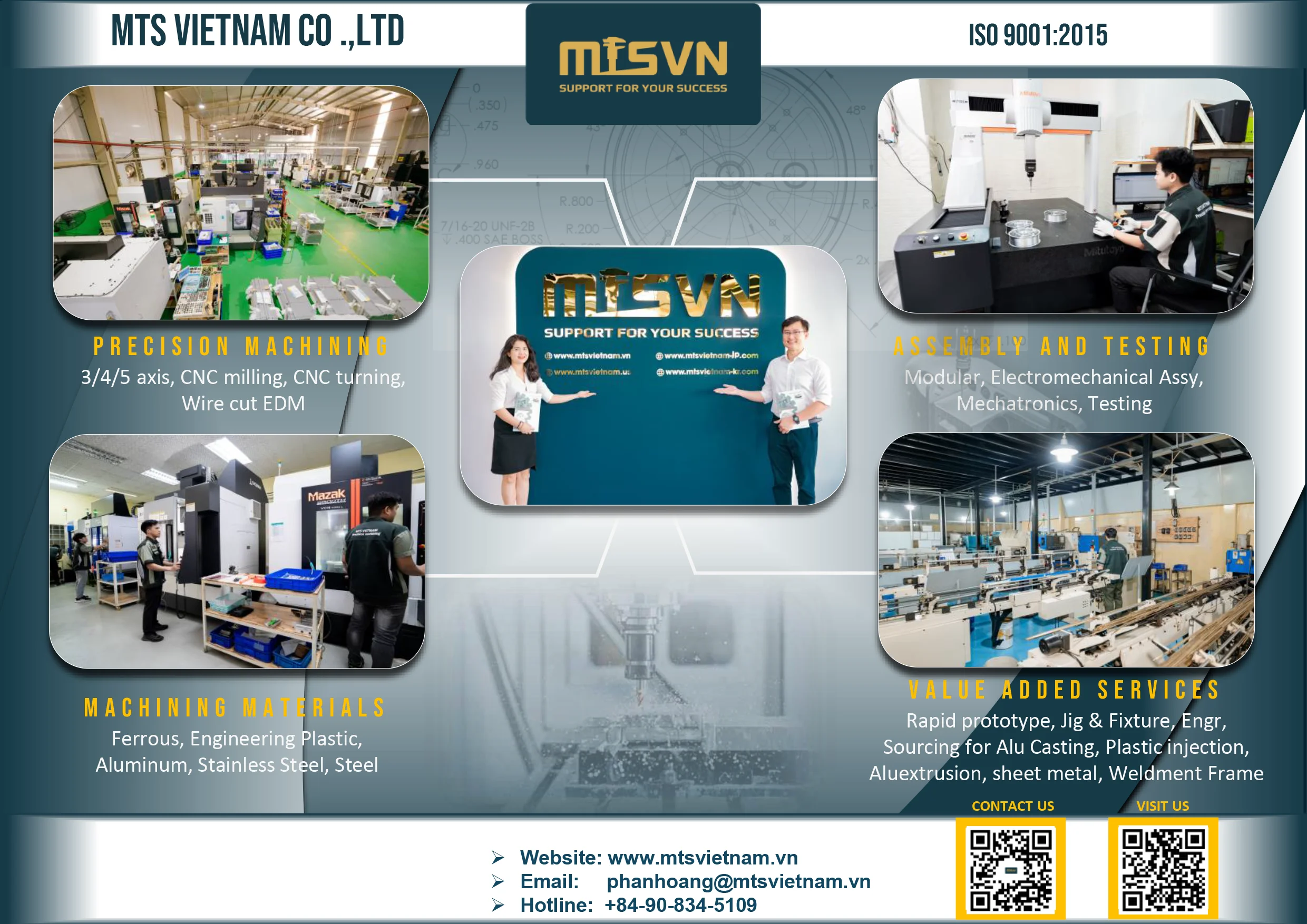
MTS Vietnam is a prominent company specializing in precision mechanical components fabrication. Established in 2017, it has quickly become a reputable name in the Vietnamese and Southeast Asian markets. The company's expertise lies in CNC milling and turning parts made from a variety of materials, including Aluminum, Steel, Stainless, POM, and other engineering plastics. MTS Vietnam is dedicated to supporting the success of its customers and strives to be a leading company in the field of precision mechanical processing both in Vietnam and internationally.
In addition to its fabrication services, MTS Vietnam offers assembly services for components and machines, as well as CNC program services. This comprehensive range of services is aimed at providing optimal solutions and benefits to its customers through the company's ecosystem and strengths. MTS Vietnam emphasizes the importance of investing in new technology and quality control equipment to ensure that it can deliver merchandise at competitive prices and within the required deadlines.
WORKSHOP: 248/10 ĐT743A Street, Binh Thung 1 Quarter, Dong Hoa Ward, Ho Chi Minh City, Vietnam
Tel/zalo/viber: 0908.345.109
Email: phanhoang@mtsvietnam.vn | info@mtsvietnam.vn
Website: www.mtsvietnam.vn (Global Market) | www.mtsvietnam-jp.com (日本)
For USA Sales, please contact MTS USA at:
Tel/zalo/viber: 978-777-1716
Email: sales@mts-usasales.com
Website: www.mtsvietnam.us (US Market)