Introduction
The semiconductor industry is pivotal to modern technology, powering everything from smartphones to supercomputers. One of the key factors that underpin the success of this industry is the consistency and reliability of the components produced. Precision machining plays a crucial role in ensuring these qualities, enabling the manufacture of high-performance, dependable semiconductor devices. This article explores the importance of consistency and reliability in the semiconductor industry and how precision machining meets these essential requirements.
The Critical Need for Consistency and Reliability in Semiconductor Manufacturing
- High Standards of Performance:
- Overview: Semiconductor devices must perform reliably under various conditions to meet the high standards expected in the industry.
- Consistency: Precision machining ensures that each component is manufactured to exact specifications, reducing variability and ensuring uniform performance.
- Reliability: Consistent manufacturing processes lead to reliable components that function as expected over their intended lifespan.
- Minimizing Defects:
- Overview: Even minor defects can significantly impact the performance of semiconductor devices.
- Consistency: Precision machining reduces the likelihood of defects, such as surface irregularities and dimensional inaccuracies, by maintaining tight tolerances and high-quality finishes.
- Reliability: Fewer defects result in more reliable semiconductor devices, enhancing their overall performance and longevity.
- Repeatability in Production:
- Overview: The semiconductor industry demands high repeatability to produce large volumes of identical components.
- Consistency: Precision machining processes are highly repeatable, ensuring that each batch of components is identical to the last.
- Reliability: Repeatable processes guarantee that every device meets the same stringent standards, ensuring reliability across all units.
- Stringent Quality Control:
- Overview: Quality control is critical in the semiconductor industry to ensure that all components meet rigorous standards.
- Consistency: Precision machining allows for precise control over manufacturing processes, facilitating stringent quality control and inspection protocols.
- Reliability: Components that pass rigorous quality control checks are more likely to be reliable in their applications.
Precision Machining Techniques for Ensuring Consistency and Reliability
- CNC Machining:
- Description: Computer Numerical Control (CNC) machining uses computer-controlled tools to produce parts with high precision.
- Consistency: CNC machining offers high repeatability, ensuring that each part is manufactured to the exact same specifications.
- Reliability: The precision and repeatability of CNC machining contribute to the reliability of the final semiconductor components.
- EDM (Electrical Discharge Machining):
- Description: EDM uses electrical discharges to erode material from a workpiece.
- Consistency: Capable of producing fine details and complex geometries with high accuracy.
- Reliability: The precision and control offered by EDM result in reliable, high-quality components.
- Laser Machining:
- Description: Laser machining employs focused laser beams to cut or engrave materials.
- Consistency: Provides high precision and minimal material waste, ensuring consistent quality across batches.
- Reliability: The precision and control of laser machining lead to reliable, defect-free components.
- Ultrasonic Machining:
- Description: Uses high-frequency ultrasonic vibrations to remove material.
- Consistency: Suitable for machining brittle materials like silicon and ceramics with consistent quality.
- Reliability: The ability to machine delicate materials without causing damage ensures the reliability of the final components.
- Lapping and Polishing:
- Description: Involves fine abrasive materials to achieve very smooth and flat surfaces.
- Consistency: Provides the high-quality surface finish required for semiconductor wafers and optics.
- Reliability: The smooth, defect-free surfaces produced by lapping and polishing contribute to the reliability of semiconductor devices.
Benefits of Consistency and Reliability through Precision Machining
- Improved Device Performance:
- Benefit: Consistent, high-quality components lead to better overall performance of semiconductor devices.
- Impact: Enhanced functionality and efficiency in electronic products.
- Higher Yield Rates:
- Benefit: Precision machining reduces the likelihood of defects, leading to higher yields during manufacturing.
- Impact: Lower production costs and more efficient use of materials.
- Greater Customer Satisfaction:
- Benefit: Reliable semiconductor devices meet or exceed customer expectations for performance and longevity.
- Impact: Increased customer trust and loyalty.
- Reduced Downtime and Maintenance:
- Benefit: Reliable components reduce the need for frequent maintenance and replacements.
- Impact: Lower operational costs and improved uptime for electronic systems.
- Enhanced Innovation:
- Benefit: Consistent and reliable components provide a solid foundation for developing new technologies and applications.
- Impact: Accelerated innovation and advancement in the semiconductor industry.
Applications of Consistency and Reliability in Semiconductor Components
- Integrated Circuits (ICs):
- Consistency: Precision machining ensures that each IC is manufactured to exact specifications, reducing variability.
- Reliability: Consistent manufacturing processes result in reliable ICs that perform as expected in various applications.
- Semiconductor Wafers:
- Consistency: High-precision machining techniques produce wafers with uniform thickness and smooth surfaces.
- Reliability: Consistent wafer quality ensures reliable performance in semiconductor devices.
- Microelectromechanical Systems (MEMS):
- Consistency: Precision machining is crucial for producing the intricate features of MEMS devices with high accuracy.
- Reliability: Reliable manufacturing processes lead to MEMS devices that function correctly in critical applications.
- Power Semiconductor Devices:
- Consistency: Precision machining ensures that power semiconductor components meet the required specifications for high-performance applications.
- Reliability: Reliable power semiconductor devices are essential for the efficient operation of power electronics.
- Optoelectronic Devices:
- Consistency: High-precision machining techniques produce optoelectronic components with consistent quality and performance.
- Reliability: Reliable optoelectronic devices are crucial for applications in telecommunications, data transmission, and imaging.
Conclusion
Consistency and reliability are paramount in the semiconductor industry, where the performance and dependability of electronic devices depend on the precision and quality of their components. Precision machining techniques, such as CNC machining, EDM, laser machining, ultrasonic machining, and lapping and polishing, play a critical role in ensuring these qualities. As technology continues to advance, the importance of precision machining in maintaining consistency and reliability will only grow, driving innovation and excellence in the semiconductor industry.
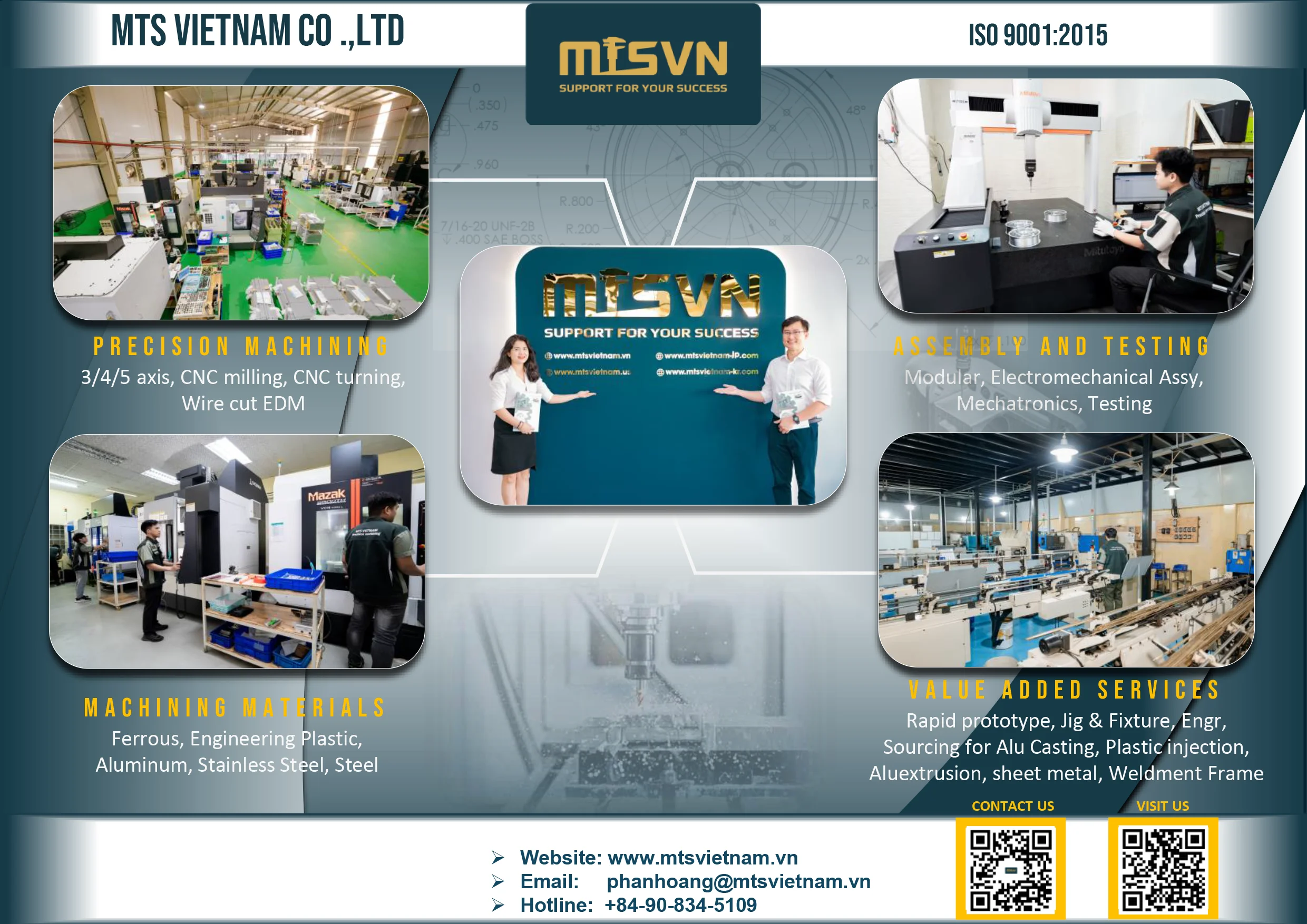
MTS Vietnam is a prominent company specializing in precision mechanical components fabrication. Established in 2017, it has quickly become a reputable name in the Vietnamese and Southeast Asian markets. The company's expertise lies in CNC milling and turning parts made from a variety of materials, including Aluminum, Steel, Stainless, POM, and other engineering plastics. MTS Vietnam is dedicated to supporting the success of its customers and strives to be a leading company in the field of precision mechanical processing both in Vietnam and internationally.
In addition to its fabrication services, MTS Vietnam offers assembly services for components and machines, as well as CNC program services. This comprehensive range of services is aimed at providing optimal solutions and benefits to its customers through the company's ecosystem and strengths. MTS Vietnam emphasizes the importance of investing in new technology and quality control equipment to ensure that it can deliver merchandise at competitive prices and within the required deadlines.
WORKSHOP: 248/10 ĐT743A Street, Binh Thung 1 Quarter, Dong Hoa Ward, Ho Chi Minh City, Vietnam
Tel/zalo/viber: 0908.345.109
Email: phanhoang@mtsvietnam.vn | info@mtsvietnam.vn
Website: www.mtsvietnam.vn (Global Market) | www.mtsvietnam-jp.com (日本)
For USA Sales, please contact MTS USA at:
Tel/zalo/viber: 978-777-1716
Email: sales@mts-usasales.com
Website: www.mtsvietnam.us (US Market)