Introduction
The semiconductor industry is at the forefront of technological advancement, enabling the development of cutting-edge electronics and computing devices. One of the critical aspects of semiconductor manufacturing is the ability to create complex geometries with high precision. These intricate designs are essential for the functionality, efficiency, and miniaturization of semiconductor devices. Precision machining plays a pivotal role in achieving these complex geometries, ensuring that components meet stringent specifications and performance standards. This article explores the importance of complex geometries in the semiconductor industry and how precision machining addresses these challenges.
The Need for Complex Geometries in Semiconductor Manufacturing
- Miniaturization:
- Overview: The trend towards smaller, more powerful electronic devices requires semiconductor components with increasingly complex and smaller geometries.
- Importance: Miniaturization enables higher density of components on chips, leading to more powerful and efficient devices.
- Enhanced Functionality:
- Overview: Complex geometries are essential for integrating multiple functions into a single semiconductor device.
- Importance: These designs improve the performance and capabilities of semiconductor devices, allowing for advanced features and applications.
- Improved Performance:
- Overview: The intricate structures of semiconductor components directly impact their electrical, thermal, and mechanical performance.
- Importance: Precision in complex geometries ensures optimal performance and reliability of the devices.
- Customization and Innovation:
- Overview: Advanced semiconductor applications often require customized designs with unique geometries.
- Importance: Precision machining enables the creation of bespoke components that drive innovation and meet specific application requirements.
Precision Machining Techniques for Achieving Complex Geometries
- CNC Machining:
- Description: Computer Numerical Control (CNC) machining uses computer-controlled tools to produce parts with high precision.
- Capabilities: Offers the ability to machine complex 3D geometries with tight tolerances.
- Applications: Used for creating intricate semiconductor components such as wafers, housings, and precision fixtures.
- EDM (Electrical Discharge Machining):
- Description: EDM uses electrical discharges to erode material from a workpiece.
- Capabilities: Capable of machining very hard materials and producing fine, detailed features.
- Applications: Ideal for creating complex features in semiconductor molds, dies, and intricate components.
- Laser Machining:
- Description: Laser machining employs focused laser beams to cut or engrave materials.
- Capabilities: Provides high precision and the ability to machine very fine details with minimal material waste.
- Applications: Used for cutting semiconductor wafers, patterning surfaces, and micro-drilling.
- Ultrasonic Machining:
- Description: Uses high-frequency ultrasonic vibrations to remove material.
- Capabilities: Suitable for machining brittle materials like silicon and ceramics without causing damage.
- Applications: Used for drilling and shaping semiconductor wafers and other fragile components.
- Lapping and Polishing:
- Description: Involves fine abrasive materials to achieve very smooth and flat surfaces.
- Capabilities: Provides the high-quality surface finish required for semiconductor wafers and optics.
- Applications: Used for final finishing of wafers and other critical components.
Benefits of Achieving Complex Geometries through Precision Machining
- Higher Device Performance:
- Benefit: Precision machining ensures that semiconductor components meet the exact geometrical specifications needed for optimal performance.
- Impact: Leads to improved functionality, higher efficiency, and greater reliability of semiconductor devices.
- Increased Yield and Efficiency:
- Benefit: High precision reduces the likelihood of defects and rejects during the manufacturing process.
- Impact: Results in higher yields, lower production costs, and more efficient use of materials.
- Advanced Capabilities:
- Benefit: The ability to machine complex geometries enables the development of advanced semiconductor devices with multiple functionalities.
- Impact: Supports innovation and the creation of next-generation technologies.
- Customization and Flexibility:
- Benefit: Precision machining allows for the creation of customized components tailored to specific applications.
- Impact: Provides flexibility for manufacturers to meet varying design requirements and market demands.
- Improved Reliability:
- Benefit: Consistent quality and precision in machining lead to reliable semiconductor components.
- Impact: Reduces the risk of device failure and extends the lifespan of electronic products.
Applications of Complex Geometries in Semiconductor Components
- Integrated Circuits (ICs):
- Complex Geometries: Features such as transistors, capacitors, and resistors integrated into a single chip.
- Precision Machining: Ensures that these intricate structures are produced with high accuracy, enabling reliable and efficient ICs.
- Microelectromechanical Systems (MEMS):
- Complex Geometries: Miniature mechanical and electro-mechanical components.
- Precision Machining: Capable of creating the fine, detailed features required for MEMS devices...
- Optoelectronic Devices:
- Complex Geometries: Structures for light emission, detection, and modulation.
- Precision Machining: Ensures precise geometries that affect the optical properties and performance of these devices.
- Power Semiconductor Devices:
- Complex Geometries: Features that manage and convert electrical power efficiently.
- Precision Machining: Ensures the accurate production of these features, which is critical for the performance of power electronics.
- Photonic Devices:
- Complex Geometries: Waveguides, modulators, and other structures that control light propagation.
- Precision Machining: Achieves the precise geometries required for efficient light manipulation and transmission.
Conclusion
Complex geometries are essential in the semiconductor industry, where the performance, efficiency, and innovation of devices depend on intricate and precise designs. Precision machining techniques, such as CNC machining, EDM, laser machining, ultrasonic machining, and lapping and polishing, play a crucial role in achieving these complex geometries. As the demand for smaller, more powerful, and more efficient semiconductor devices continues to grow, the importance of precision machining in maintaining these high standards will only increase, driving further advancements in the industry.
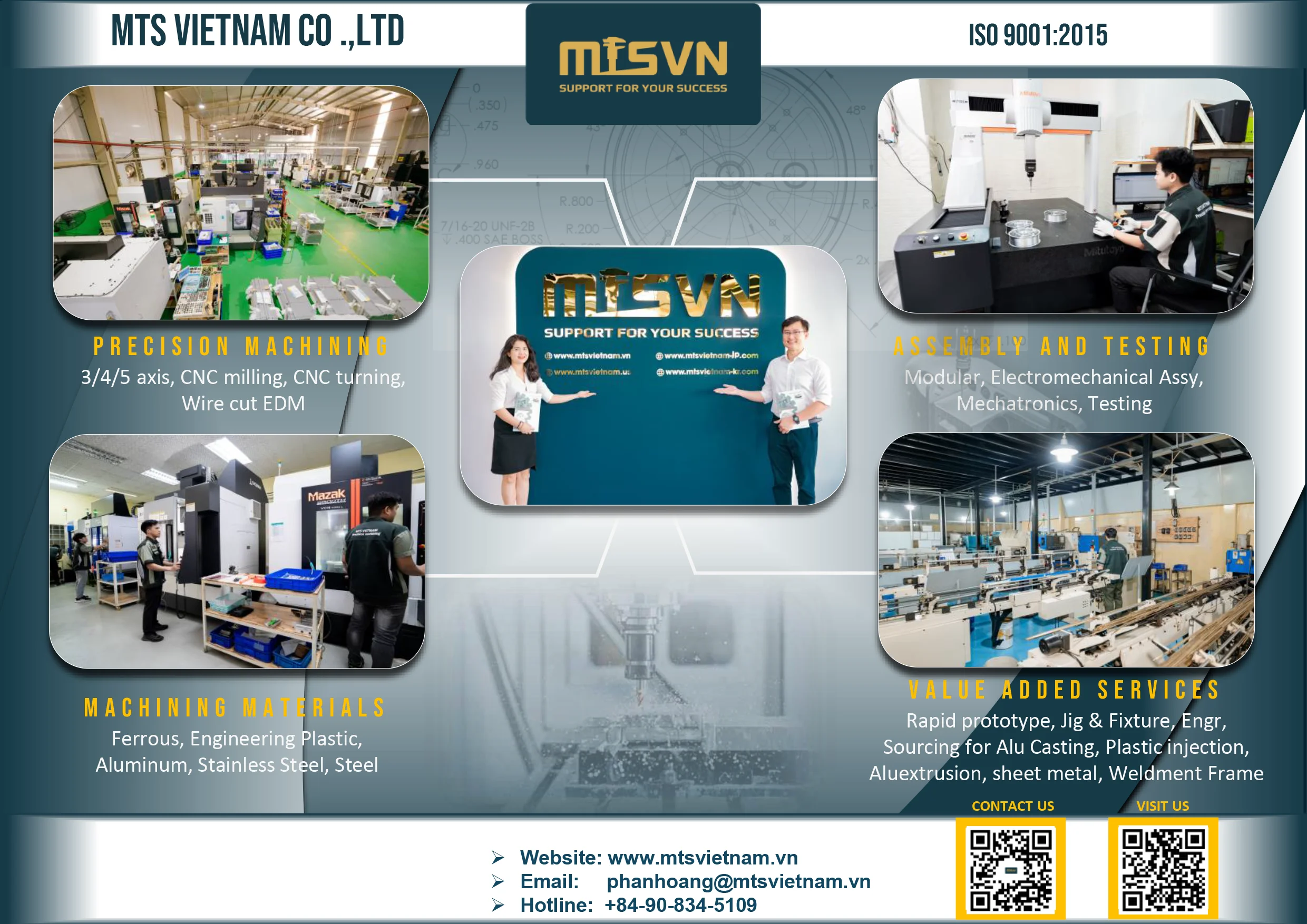
MTS Vietnam is a prominent company specializing in precision mechanical components fabrication. Established in 2017, it has quickly become a reputable name in the Vietnamese and Southeast Asian markets. The company's expertise lies in CNC milling and turning parts made from a variety of materials, including Aluminum, Steel, Stainless, POM, and other engineering plastics. MTS Vietnam is dedicated to supporting the success of its customers and strives to be a leading company in the field of precision mechanical processing both in Vietnam and internationally.
In addition to its fabrication services, MTS Vietnam offers assembly services for components and machines, as well as CNC program services. This comprehensive range of services is aimed at providing optimal solutions and benefits to its customers through the company's ecosystem and strengths. MTS Vietnam emphasizes the importance of investing in new technology and quality control equipment to ensure that it can deliver merchandise at competitive prices and within the required deadlines.
WORKSHOP: 248/10 ĐT743A Street, Binh Thung 1 Quarter, Dong Hoa Ward, Ho Chi Minh City, Vietnam
Tel/zalo/viber: 0908.345.109
Email: phanhoang@mtsvietnam.vn | info@mtsvietnam.vn
Website: www.mtsvietnam.vn (Global Market) | www.mtsvietnam-jp.com (日本)
For USA Sales, please contact MTS USA at:
Tel/zalo/viber: 978-777-1716
Email: sales@mts-usasales.com
Website: www.mtsvietnam.us (US Market)