Introduction
The medical field demands high levels of precision, quality, and reliability in its devices and equipment. One of the crucial factors that make precision machining indispensable in this industry is its ability to create complex geometries. These intricate shapes and designs are essential for the functionality and effectiveness of modern medical devices. This article explores the importance of complex geometries in the medical field and how precision machining meets these demanding requirements.
The Need for Complex Geometries in the Medical Field
- Advanced Medical Devices:
- Importance: Modern medical devices often incorporate complex geometries to perform specialized functions and improve patient outcomes.
- Examples: Stents, orthopedic implants, and minimally invasive surgical instruments.
- Minimally Invasive Procedures:
- Importance: The trend towards minimally invasive procedures requires smaller, more intricate devices that can navigate the human body with minimal trauma.
- Examples: Catheters, endoscopes, and laparoscopic instruments.
- Customized Patient Solutions:
- Importance: Customization of medical devices to fit individual patient anatomies often involves complex geometries.
- Examples: Custom orthopedic implants and dental prosthetics.
- Multi-Functional Devices:
- Importance: Devices that integrate multiple functions within a single unit often require complex internal and external geometries.
- Examples: Multi-lumen catheters and advanced diagnostic equipment.
Precision Machining Techniques for Creating Complex Geometries
- CNC Machining:
- Description: Computer Numerical Control (CNC) machining uses computer-controlled tools to produce parts with high precision.
- Capabilities: Can create complex 3D shapes and intricate features with tight tolerances.
- Applications: Manufacturing surgical instruments, orthopedic implants, and dental devices.
- Electrical Discharge Machining (EDM):
- Description: EDM uses electrical discharges to erode material from a workpiece, ideal for hard materials and intricate shapes.
- Capabilities: Produces fine details and complex internal geometries.
- Applications: Producing cardiovascular stents and implantable devices with intricate designs.
- Laser Machining:
- Description: Uses focused laser beams to cut or engrave materials with high precision.
- Capabilities: Creates detailed features and complex patterns on small-scale medical components.
- Applications: Crafting detailed features on catheters, microfluidic devices, and surgical tools.
- Ultrasonic Machining:
- Description: Uses high-frequency ultrasonic vibrations to remove material, suitable for brittle materials.
- Capabilities: Can machine delicate materials without causing damage, producing intricate shapes.
- Applications: Machining ceramic components used in medical imaging equipment.
- Additive Manufacturing (3D Printing):
- Description: Builds components layer by layer using various materials, allowing for complex geometries.
- Capabilities: Creates intricate and customized shapes that are difficult to achieve with traditional machining.
- Applications: Producing custom prosthetics, dental implants, and patient-specific surgical guides.
Benefits of Precision Machining for Complex Geometries in Medical Devices
- High Precision and Accuracy:
- Benefit: Precision machining achieves extremely tight tolerances and high dimensional accuracy.
- Impact: Ensures that complex geometries meet exact specifications, enhancing the functionality and reliability of medical devices.
- Customization and Personalization:
- Benefit: Advanced machining techniques allow for the creation of customized medical devices tailored to individual patient needs.
- Impact: Improves patient outcomes by providing better-fitting and more effective solutions.
- Miniaturization:
- Benefit: Precision machining can produce miniaturized components with complex shapes, essential for minimally invasive procedures.
- Impact: Enables the development of smaller, more precise medical instruments that reduce patient trauma and recovery time.
- Improved Functionality:
- Benefit: Complex geometries can enhance the functionality of medical devices by integrating multiple features into a single component.
- Impact: Leads to more versatile and effective medical tools and equipment.
- Enhanced Surface Finish:
- Benefit: Techniques such as lapping and polishing provide smooth, high-quality surface finishes on complex geometries.
- Impact: Essential for biocompatibility and preventing tissue damage, especially in implantable devices.
Applications of Complex Geometries in Medical Devices
- Surgical Instruments:
- Description: Tools used in surgical procedures, requiring high precision and reliability.
- Machining Role: Producing intricate and sharp features, ensuring durability and sterility.
- Orthopedic Implants:
- Description: Devices such as joint replacements and bone plates used to support or replace damaged bones.
- Machining Role: Manufacturing components with complex shapes that fit precisely into the human body.
- Dental Devices:
- Description: Tools and implants used in dental procedures.
- Machining Role: Creating precise and durable components, such as dental crowns, bridges, and orthodontic devices with intricate designs.
- Cardiovascular Devices:
- Description: Devices such as stents, pacemakers, and heart valves used in cardiovascular treatments.
- Machining Role: Ensuring high precision and biocompatibility, critical for devices implanted in the cardiovascular system with complex geometries for optimal functionality.
- Diagnostic Equipment:
- Description: Devices used for medical diagnostics, such as MRI machines and ultrasound equipment.
- Machining Role: Producing high-precision components that ensure the accuracy and reliability of diagnostic readings with complex internal structures.
Challenges and Solutions in Machining Complex Geometries for Medical Devices
- Maintaining Tight Tolerances:
- Challenge: Achieving the extremely tight tolerances required for complex geometries in medical components.
- Solution: Utilizing advanced CNC machining techniques, high-precision tooling, and rigorous quality control measures.
- Material Handling:
- Challenge: Machining hard or brittle materials used in medical devices.
- Solution: Using specialized machining techniques such as EDM and ultrasonic machining to handle challenging materials effectively.
- Surface Finish Requirements:
- Challenge: Ensuring high-quality surface finishes for complex geometries to prevent tissue damage and ensure device functionality.
- Solution: Employing fine abrasives, polishing processes, and precision lapping to achieve smooth surfaces.
- Cost and Efficiency:
- Challenge: Balancing the need for complex geometries with cost-effectiveness and production efficiency.
- Solution: Implementing automated systems, optimizing tool paths, and leveraging advanced software for process simulation and optimization.
Conclusion
Precision machining is essential in the medical field for creating complex geometries that enhance the functionality, reliability, and customization of medical devices. Techniques such as CNC machining, EDM, laser machining, ultrasonic machining, and additive manufacturing enable the production of intricate shapes and detailed features required for advanced medical instruments, implants, and diagnostic equipment. As the medical industry continues to evolve, the importance of precision machining in developing and manufacturing high-quality medical devices with complex geometries will remain crucial, driving innovation and improving patient outcomes.
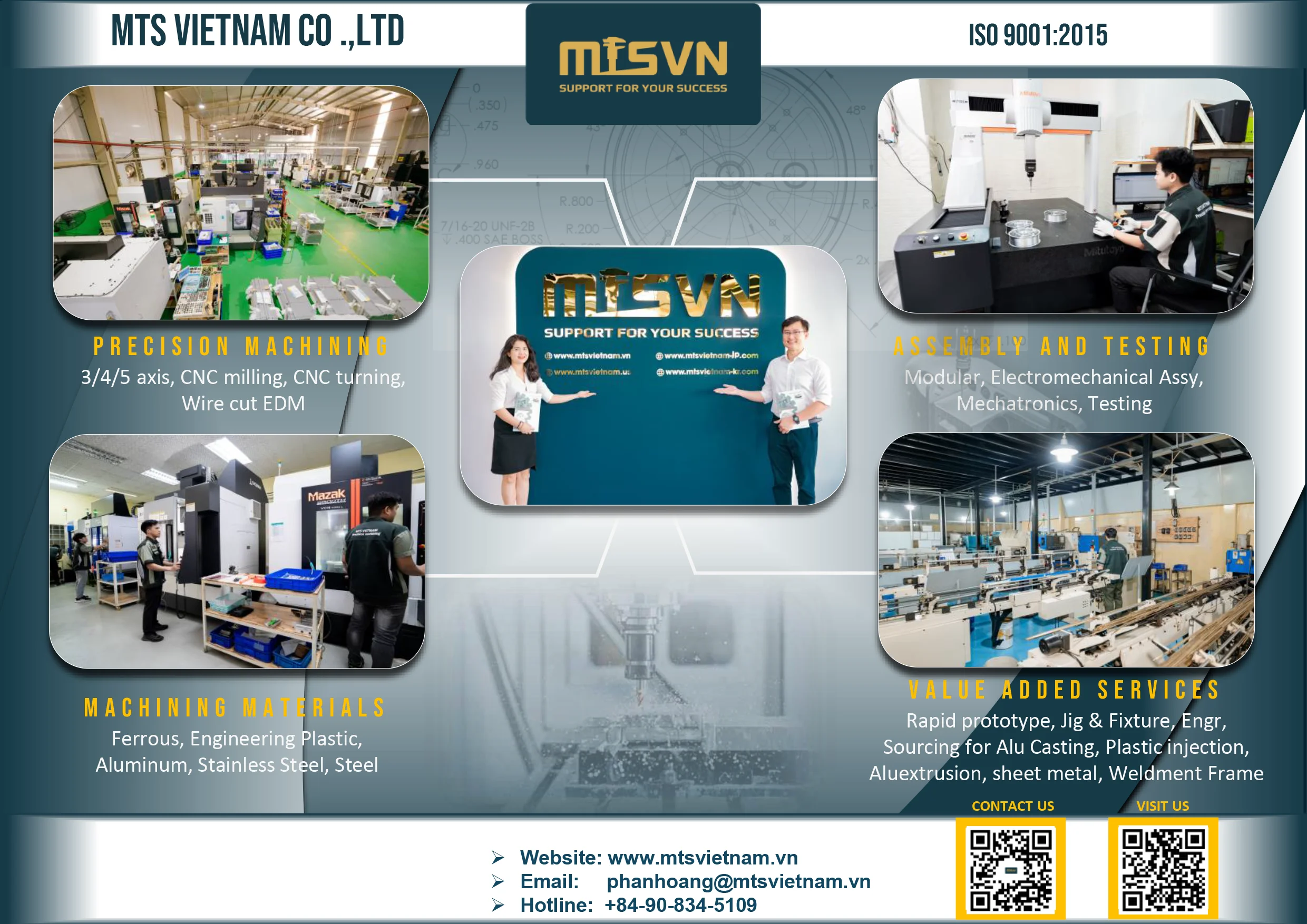
MTS Vietnam is a prominent company specializing in precision mechanical components fabrication. Established in 2017, it has quickly become a reputable name in the Vietnamese and Southeast Asian markets. The company's expertise lies in CNC milling and turning parts made from a variety of materials, including Aluminum, Steel, Stainless, POM, and other engineering plastics. MTS Vietnam is dedicated to supporting the success of its customers and strives to be a leading company in the field of precision mechanical processing both in Vietnam and internationally.
In addition to its fabrication services, MTS Vietnam offers assembly services for components and machines, as well as CNC program services. This comprehensive range of services is aimed at providing optimal solutions and benefits to its customers through the company's ecosystem and strengths. MTS Vietnam emphasizes the importance of investing in new technology and quality control equipment to ensure that it can deliver merchandise at competitive prices and within the required deadlines.
WORKSHOP: 248/10 ĐT743A Street, Binh Thung 1 Quarter, Dong Hoa Ward, Ho Chi Minh City, Vietnam
Tel/zalo/viber: 0908.345.109
Email: phanhoang@mtsvietnam.vn | info@mtsvietnam.vn
Website: www.mtsvietnam.vn (Global Market) | www.mtsvietnam-jp.com (日本)
For USA Sales, please contact MTS USA at:
Tel/zalo/viber: 978-777-1716
Email: sales@mts-usasales.com
Website: www.mtsvietnam.us (US Market)